A reader mentioned the Pepper Cat restaurant so I took a short tour of some of the downtown eateries; more photos to follow.
These are stairs to Chicano’s – the food on the website menu looks amazing but I’d have trouble entering.
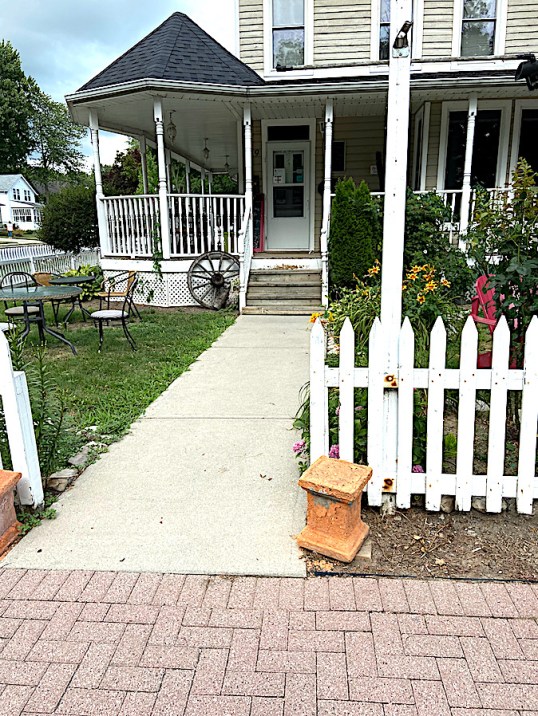
A reader mentioned the Pepper Cat restaurant so I took a short tour of some of the downtown eateries; more photos to follow.
These are stairs to Chicano’s – the food on the website menu looks amazing but I’d have trouble entering.
Amherstburg is not Bogota.
Populations:
Amherstburg 21,936
Bogota 11, 167,000
Amherstburg’s Open Air event where, for the third year, barriers prevent the almost 5,000 persons with disabilities from equally participating in their community: barriers to the post office, banks, hair salons and parking to allow for games, patios, entertainment to occupy the streets.
Visit Amherstburg website includes two links to the same map:
“To assist you we have this map to help you best decide where to park your vehicle. You’ll see we have added additional accessible parking spots at the Open Air thresholds as well as additional bike racks to help encourage active transportation.
Click here to see additional bicycle, vehicle and accessible parking areas.”
The first map:
The second map:
Who decided it was a good idea to have two links to one map on the same page?
Amherstburg is not Bogota.
This is a continuation of photos showing the barriers to Amherstburg’s downtown due to its ‘Open Air’ event where open streets are closed to vehicular traffic on the weekends from May to September.
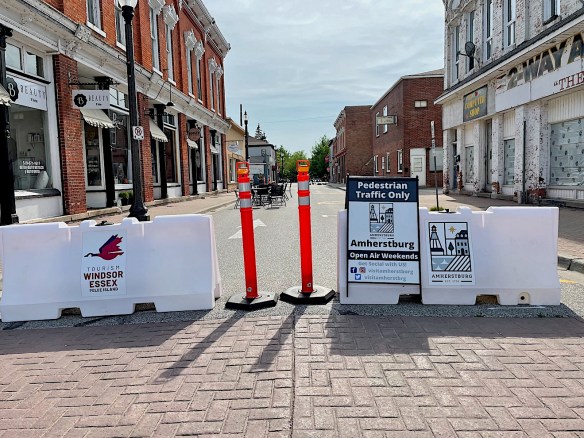
Amherstburg’s Open Air event where, for the third year, barriers prevent the almost 5,000 persons with disabilities from equally participating in their community: barriers to the post office, banks, hair salons and parking to allow for games, patios, entertainment to occupy the streets.
The River Bookshop stairs blocked me from the art windsor essex Group of Seven exhibit.
I raised awareness about the Barrier to Accessibility.
Bookshop Co-owner Richard Peddie blocked me on twitter.
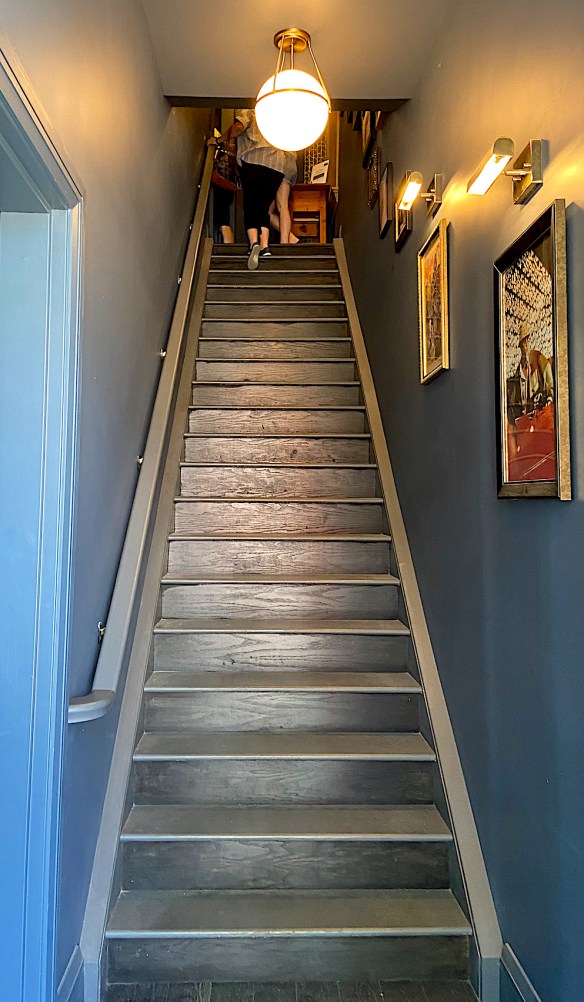
Twenty stairs up to second level at River Bookshop
As published in the Windsor Star July 23, 2022.
Re: Amherstburg gets a closer look at Group of Seven artwork, by Dave Battagello, July 2
Not everyone will get a closer look.
The exhibition was being hosted in a downtown bookstore owned by Richard Peddie.
Victoria Little, chairwoman of the Board of Directors of Art Windsor-Essex, stated recently, “AWE regrets hosting this exhibition in a space that is not accessible in Amherstburg.”
In her letter, Ms. Little explained: “AWE also undertakes partnerships when our overarching goals for a program align with those of community visionaries, such as Richard Peddie.”
But if the goal was to bring this exhibit to Amherstburg, AWE could have selected accessible locations like the downtown Gibson Gallery or the Libro Centre.
The livability of communities cannot be improved if persons with disabilities continue to experience discrimination because of attitudinal and physical barriers.
AWE needs to adopt an accessibility policy and align its goals with legislation that ensures every person has a right to equal treatment with respect to services, goods and facilities without discrimination.
Ms. Little asked for my “patience and understanding that the organization operates within the broader systems of obligations that may conflict with our overarching accessible vision.”
I have been more than patient as I have advocated for improved accessibility for over 30 years. There’s the Ontarians with Disabilities Act 2001, the Accessibility for Ontarians with Disabilities Act 2005, the Human Rights Code, the Charter of Rights and Freedoms, the UN Convention on the Rights of Persons with Disabilities, along with the goal of a fully accessible province in 2025.
Yet, a public art organization decided it was okay to exclude persons with disabilities with this recent exhibition. Linda Saxon, Amherstburg
Richard Peddie co-owns River Bookshop in Amherstburg, built in 1885 and restored to honour the building’s heritage. Peddie requested and received heritage designation in 2021.
The website states, “Our second-floor event space is a very important part of our ambition to create a powerful and popular “Third Place” in our community. Consistent with our River Bookshop our values are to educate, inspire, engage and entertain.”
Twenty stairs that Peddie says you just walk up poses a barrier to people with disabilities. Shameful. There is also a raised threshold that I got stuck on and issues with the website.
Dan Macdonald, am800, interviewed Richard Peddie, River Bookshop owner and Jennifer Matotek, Executive Director Art Windsor Essex (AWE), formerly Art Gallery Windsor about the Group of Seven Pop Up Exhibit. Read the article or listen to the interview.
Peddie mentions the event is free and you just walk upstairs because the event is on the second floor, called a hole in the wall. He explains that it’s an 1887 building and they weren’t accessible in those days.
Yes, but it’s 2022.
Meanwhile, Matotek is ‘looping in some’ team members and asking if they can work on some language for the show around access, ‘so we can be transparent with the public about the lack of access for this space.’
Being transparent about a lack of access is not the same as equal access.
Amherstburg town hall displays the inaugural Essex County Accessibility Flag for National AccessAbility Week along with the ‘accessible entrance at back’ lawn sign.
The 54 year old wheelchair access symbol was intended to indicate access. A more inclusive symbol to display on a flag would be the Hidden Disability Symbol Canada.

Sunday, May 29, 2022 – the start of National AccessAbility Week; inclusive from the start is this year’s theme and this photo is my contribution to raising awareness of the need for inclusion in our community.

Amherstburg’s Open Air event where, for the third year, barriers prevent the almost 5,000 persons with disabilities from equally participating in their community: barriers to the downtown core, including the post office, banks, hair salons and parking to allow for games, patios, entertainment to occupy the streets.
 the burg watch