The Burg Watch: Why I Stand Up for Our Community

As Amherstburg’s first local blogger since 2011 and creator of the burg watch, my goal has always been to keep our community informed. 

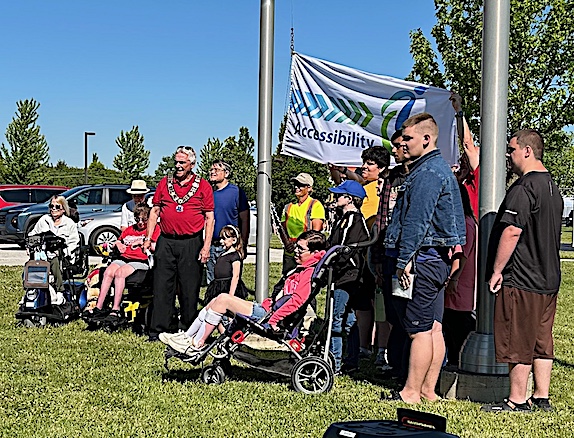
Through the burg watch I challenge the status quo because our community deserves better than the minimal efforts and performative gestures like promoting proclamations and raising flags.

A truly inclusive community removes barriers that prevent people from equally participating in their own community.

I’ve written about the barriers that need to be removed to end the exclusion. For example, the lack of accessible amenities like infrastructure, recreation, and civic engagement.

My disability rights advocacy isn’t a political hobby; it’s a commitment to a human right to belong.

Standing up for what I believe in and trying to hold our administration and council accountable has resulted in pushback and isolation. But I’d rather face criticism for defending our community’s right to equity than be liked for staying silent while residents are excluded from their own town.

I am proud of the conversations the burg watch has generated. I’ll continue to watch, write, and advocate—because a stronger, fully accessible Amherstburg benefits the entire community.

I appreciate the friends and allies that have joined me along this journey.

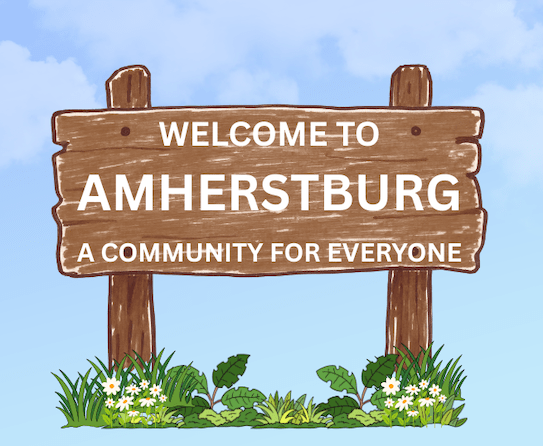
graphic image of brown wooden sign with white text that reads welcome to Amherstburg - a community for everyone with greenery at the base of the posts.
graphic image of wooden sign with text: welcome to Amherstburg – a community for everyone.

What are the candidates’ position on Open Air? Chris Gibb

Sometimes they play favourites and don’t answer my questions. But I’m continuing the tradition I started in 2014. For now, I’m only asking about Open Air and will set aside a page just for their Open Air answers – IF they answer.

the burg watch: As you know, Open Air remains a contentious issue, especially because of Councillor Crain’s motion to not revisit it until the end of this term. Will you remove barriers that deny people with disabilities equal access to the community when streets are closed during Open Air weekends?

Chris Gibb: As the town’s Accessibility Committee has not identified any barriers, I would need you to be more specific and advise me as to which barriers you have identified. I would then be able to address your concerns.

note: I delegated to council on Open Air barriers; I’ve submitted over a dozen emails to council members and I’ve written several letters to the editor about the exclusion.

the burg watch: Would you direct me to the minutes of Accessibility committee meetings where the committee did not identify any barriers to open air?

Chris Gibb: Sorry but I do not recall the exact date of the particular meeting. Perhaps one of the committee members would be able to help.

the burg watch: I asked Tony Pietrangelo, candidate and accessibility committee member, did the Accessibility Committee identify any barriers at Open Air? It’s a simple yes or no question. 

Pietrangelo did not respond.

NOTE: Gibb answered his wife’s 2022 question about Open Air:

“Personally, I am a huge fan of the Open Air program and I hope to see it continue. I see Open Air as a unique way for the whole “Amherstburg Family” to get together and strengthen our connections with each other, and also develop new connections with new people. If we are going to maintain our small town sense of community as we grow, we have to find ways to gather together and celebrate our fantastic town. We will be seeing a tidal wave of new growth in the next 5 to 10 years with many residents who are new to Amherstburg, if we want to keep our small town charm, we need to have opportunities for those new people to be welcomed into the “Amherstburg Family”, Open Streets is one of those opportunities.”

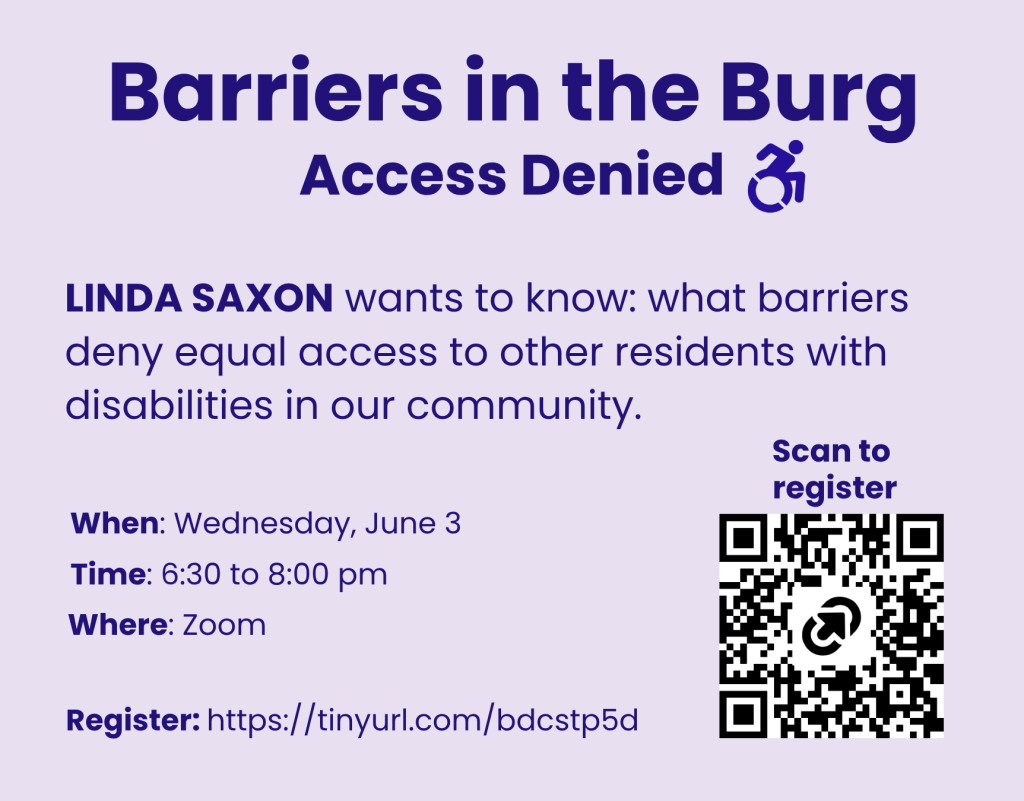
Barriers in the burg

Let’s kick off National AccessAbility Week 2026 (May 31 to June 6) by acknowledging that barriers in the burg exist.

This year’s theme, “Building a Strong, Accessible Canada” is supposed to be a call to action for governments, organizations, businesses, and individuals to take meaningful steps to advance a barrier-free country and ensure persons with disabilities can participate fully in all aspects of society.

RECAP Accessibility Advisory Committee Meeting April 14, 2026

This recap reflects the audible portions of the meeting. Members of the committee spoke without their microphones activated several times during the meeting, including Chair Shirley Prue who frequently speaks away from the microphone. I have raised the issue several times with council and administration.

The committee could still benefit from training on procedures, as I suggested during my June 2022 delegation. There seems to be confusion about the necessity of motions.

Also notable is member Emily Rutherford’s repetitive requests she made in January to address three concerns adversely affecting people with disabilities in the community.

There were only two scheduled agenda items:

  1. The multi-year accessibility plan
  2. National AccessAbility Week 

Chair Shirley Prue asks the clerk to take the roll call and read the land acknowledgement.

2026 Multi-Year Accessibility Plan

  • Prue asks the clerk to read her message to be included in the plan.
  • Prue asks if any comments from them, other than editorial was received. 
  • Clerk mentions receiving comments from various stakeholder groups, including service providers and employment agencies, all very supportive of the plan.

    No one asked how many comments or what they were.
  • All the comments echoed this seems a very progressive plan that puts accessibility in the forefront. 
  • Some feedback was specific. For example, TWEPI sent information on hosting accessible events. 
  • Once this is adopted, the final adopted version will come back to the next committee meeting to discuss next steps and the implementation; look at 2026 and 2027 goals.

Implementation and Ongoing Efforts

  • The clerk discusses the committee’s efforts to incorporate stakeholder engagement in various activities and the importance of ongoing feedback.
  • The plan is described as a living document with projects that will be reviewed annually to ensure they remain priorities.
  • Marc Renaud praises the committee’s active role in identifying and addressing accessibility issues, emphasizing the need for continuous improvement.
  • Prue encourages members to stay informed and communicate issues to ensure the highest common denominator of accessibility is met.

National AccessAbility Week Update

  • The clerk outlines the schedule for National AccessAbility Week, May 31 to June 6, including a multimedia campaign, flag raising ceremonies, and speaking engagements.
  • Mayor Michael Prue and Chair Shirley Prue will speak about the importance of accessibility at the June 3 flag raising at the Libro. (Someone previously encountered barriers at the town hall flag raising).

I’m looking forward to the speeches. Mayor Prue has acknowledged the town has not brought it (AODA) into force; has said if people won’t get out of the way on sidewalks, they won’t get out of the way; and stated, “This town has not been compliant. And I have promised, as mayor, and the council has promised, that we will hence for, hence forward, going forward, always be AOD compliant. And I want people to know that the those who have disabilities have every right to use every one of the services in this town, the same as everyone else,” at the start of 2025 – the AODA deadline.

But the town continues with Open Air and an agreement with Movati.

  • The town will feature an accessibility-focused book display at the Amherstburg branch of the Essex County Library.
  • Invitations will be sent to various local organizations to participate in events and activities during the week.
  • Easter Seals pledge forms will be available at the flag raising ceremony to encourage community commitment to accessibility.
  • Anyone can make that pledge there, hold it up, wearing their red shirt, publicly reaffirm their position, and hopefully that encourages a sense of advocacy and support and community activism that will really sort of drive forward change in communities and different places.

I have advocated for a strong commitment to accessibility for 35 years. And I know other residents are committed to change, but we need a strong political commitment, not another piece of paper.

Communication and Outreach

  • The clerk details the communication plan for National Accessibility Week, including social media posts, Rivertown Times articles, and gateway sign messaging.
  • The purpose behind this proposal will be to really celebrate National AccessAbility Week by raising awareness about accessibility and promoting the initiatives to be more inclusive
  • Key messages will be that:
  • National AccessAbility Week celebrates the leadership, achievements and contributions of persons with disabilities in building stronger and more inclusive communities
  • Accessibility is a shared responsibility, that together residents, businesses and community partners can help make Amherstburg more inclusive for everyone. 
  • Throughout the week, the town will showcase local accessibility features and municipal parks, trails and facilities and share supports that are available to support persons with disabilities. 
  • The flag raising ceremony will serve as a symbol of our continued commitment to accessibility, inclusion and community collaboration. 
  • Our communication channels will be using the website to feature these announcements, social media posts, which will be featuring local champions and accessible spaces and tips. 
  • The hashtag #NAAWeek2026 will be used to promote the week and encourage community engagement.
  • Emily raises a concern about the inclusion of assisted living facilities in the outreach; the clerk promises to reach out to them.
  • Tony Pietrangelo suggests reaching out to grade schools, emphasizing the importance of involving students in accessibility initiatives.

Unfinished Business

  • Tony Pietrangelo requests an update on the committee’s finances, including the status of the reserve fund.
  • The clerk explains that the reserve fund is built up annually with a base contribution of $55,000, with additional funds from specific projects.
  • The committee discusses the need for regular financial updates and the importance of identifying barriers before allocating funds.
  • Emily brings up the issue of a hazardous pylon near the beer store, which the clerk acknowledges and promises to address.

    She brought this up in January; see list of her January concerns below.
  • Emily mentioned she wasn’t at the last meeting, but she was at the previous one and believed something they discussed was meeting up about the blind sign over at Blue Haven and what we were going to do at the crosswalk that they’re trying to implement near blue Haven. She wondered if that was still something that they were going to discuss. The clerk said when her availability is open, they’ll have that call.

She brought this up in January; see list of her January concerns below.

Emily brought up three concerns at the January meeting:

  1. She pointed out the pylon in the middle of the sidewalk near the Beer Store that’s been there for about a year and a half. At that meeting the clerk said we hope to affect the repair as quickly as we possibly can, following that and remove that notification of the hazard as we remove the hazard itself; he can follow up to find out.
  2. She raised concerns about the safety of crossing Front Road near the Blue Haven facility. The clerk advised in January the budget deliberations addressed those concerns in terms of council hearing the concerns of the residents and moving a motion to include the funds necessary to construct the crosswalk in close proximity to Blue Haven.
  3. She raised concern about signage indicating a blind resident lives in the area. The clerk said at that time certainly I can take that and follow that up offline. Generally, those requests, we receive them often in terms of areas where you know there may be needs and then signage is erected to reflect that need. So that’s not a problem. We can follow up on that. Let’s chat after the meeting and we’ll pursue that for you. 

New Business

  • Emily raises concerns about the placement of barriers during Open Air weekends; the clerk agrees to review and address.
  • The committee discusses the importance of ensuring accessibility for all, including the use of sidewalks and proper placement of barriers.
  • Prue emphasizes the need for continuous improvement and community involvement in accessibility initiatives.
  • The meeting concludes with a motion to adjourn, which is seconded and approved.

The committee would receive emails. I requested copies of those emails but have not received a response. I have repeatedly requested that documents be attached to agendas to create efficiencies.

Meeting adjourned.

Defamation And Disability Advocacy

My defamation lawsuit against the town clerk and town of Amherstburg is the result of my disability advocacy four years ago.

In January 2022, I critiqued the draft multi-year accessibility plan council approved in December 2021.

I submitted what I perceived to be deficiencies of the draft plan to council, as I had done for decades.

I conveyed my concerns about the plan, council’s approval of the traditional voting method for 2022 and highlighted some barriers. 

I provided input on the town’s accessibility plans since the Ontarians with Disabilities Act (ODA) 2001 required organizations to create them annually.

The ODA’s purpose was to “improve opportunities for persons with disabilities and to provide for their involvement in the identification, removal and prevention of barriers to their full participation in the life of the province.” 

The ODA mandated plan contents. 

Plans were to include a report on measures taken, measures in place, and the next year’s measures to take to identify, remove and prevent barriers. 

The town was also required to assess, review and list its by-laws, policies, programs, practices and services to identify barriers.

I delegated to council and the accessibility committee; I emailed and wrote letters to the editor to help raise awareness of some barriers.

I had already advocated for ten years for an accessible library, but the town remained silent.

Throughout the decade the town pursued funding for other projects like a marina and arena, despite the provincial government’s grant stipulation that accessibility was the number one priority.

Finally, my human rights complaint against the town was settled and an elevator was installed in the library along with accessible parking spaces.

The town installed a plaque in the library lobby crediting others with my accomplishment.

I reiterated some of the barriers that were either not included in the plans or were not removed when they could have been.

For example, an accessible town website was relegated to year 3 of the town’s first accessibility plan, then listed as a priority for 2005, and then 2006.

A 2007 report informed council that the website was compliant with W3C accessibility standards but it wasn’t, according to an external expert. 

In 2009, a newly designed website was unveiled and problems continued. 

In 2011, I mentioned difficulty navigating the website. 

In 2014, Amherstburg was invited to hire esolutions when Essex County redesigned its site to meet accessibility standards; Leamington and Essex had already hired the company, but Amherstburg declined. 

According to the town’s site, esolutions redesigned Amherstburg’s site in 2016, although it still had issues.

Thousands of dollars and redesigns later, in 2020 administration recommended, and council agreed, to request the province to extend the AODA January 1, 2021 website compliance deadline to at least January 1, 2022 due to COVID-19.

Following the January 1, 2022 deadline extension request, the province agreed the town’s work should be completed prior to December 31, 2024. 

The new website redesign and refresh was not to exceed $70,000, excluding HST.

The AODA 2005 now requires organizations to review their multi-year plans every five years but report annually on barrier removal progress.

Although the town’s plan review is due by December 2026, the town posted a 2026 Multi-Year Accessibility survey on January 26, 2026.

The survey introduction states, “The Town’s Multi-Year Accessibility Plan outlines the outcomes and initiatives that reaffirm the Town’s commitment to an accessible community and to building an equitable and inclusive society that values the contributions of people with disabilities.”

I do not feel like my contributions have been valued – my decades of input parallel decades of barriers.

Despite my repetitive requests for a strong commitment to accessibility, the town failed to meet the 2025 AODA compliance deadline.

In fact, Mayor Prue even declared, ‘this town has not been compliant.’

Commentary by Linda Saxon

Amherstburg library accessibility journey

The town of Amherstburg installed a plaque in the library lobby crediting others with my accomplishment.

The town remained silent during the ten years I requested equal access to the library, as documented in the Ontario Human Rights Commission’s Investigative Report.

Throughout the decade, the town pursued funding for other projects like a marina and arena, despite accessibility being the number one priority stipulated in the government grants.

Then-Mayor Tony DiBartolomeo said publicly if someone filed a human rights complaint they would be forced to do it.

I filed a human rights complaint and the town was forced to take the action it should have taken more than a decade earlier.

An elevator was installed and accessible parking spaces were designated.

The Ontario Human Rights Commission highlighted some significant cases in its 2004 Annual Report, including:

Linda Saxon v. Corporation of Town of Amherstburg (Settlement, H.R.T.O.)

A settlement was reached between the Commission, the complainant and the respondent Town. The complainant made an initial complaint, on the basis of disability, because she was unable to access the Town’s library, which could only be entered via a number of stairs. The library has been renovated since the complainant filed her complaint. The Town has created a lobby at ground level with an elevator and automated doors. It also attempted to make modifications to a washroom to make it accessible. The Commission’s barrier-free design expert reviewed the renovations and found some remaining barriers, but approved of the elevator itself. The Town has agreed to implement a number of the Commission’s expert’s recommendations to improve accessibility at the Town library, namely:

  •  install handrails on either side of a ramp of a specified thickness;
  •  make level the threshold at an entrance;
  •  request the County Library to create an accessible after-hours book depository;
  •  install lever hardware on a door to the accessible washroom;
  •  remove a vanity unit to provide sufficient clearance in the accessible washroom;
  •  relocate the light switch, side grab bar, mirror, and paper dispenser in the accessible washroom; and,
  •  replace push buttons with push plates of a larger diameter that are easier to manipulate.As part of the settlement, the respondent has also agreed to retain a qualified consultant to provide a mandatory training session for the members of the town council on the accommodation of individuals with disabilities.

The Burg Watch Is 14 years old

In 2011, right after the 2010 election, I became Amherstburg’s first local blogger. Having a record to review to make more informed decisions about future candidates was my goal.

I was also the first one to facilitate questions to the candidates, for which I endured threat of legal action and harassment.

Some candidates ignored me while others were happy to answer. Even though I allowed for generous deadlines, one claimed she couldn’t meet it. Funny how she posted about 45 tweets in the same time frame; I discovered just how nasty some people are.

Another candidate was nasty when I shared my observations of what appeared to be a slate. (I’m sure there will be more commonalities among candidates in 2026. The facts are not my opinion).

As a person with disabilities, and an advocate, I let candidates know about their inaccessible campaigns. Anyone excluding a marginalized community, while hypocritically campaigning to represent everyone, wouldn’t get my vote. Attitudinal barriers are obvious.

In 2014, the three candidates who created websites had accessibility issues. In 2022 more candidates used social media yet didn’t provide accessible information, even after I pointed it out to them and after they received information about conducting accessible campaigns. Lori Wightman’s website had accessibility issues in 2018 and 2022. 

Noteworthy about the 2022-2026 council:

  • the more restrictive procedural by-law limiting citizen participation; delegates can only speak to an issue that’s listed on the agenda and if it’s accompanied by an admin report or a by-law.
  • Councillor Crain and Deputy Mayor Gibb voted a couple of times against audience members speaking to council.
  • the amount of time some council members spend on self promotion while ignoring emails from residents.
  • failing to meet the January 1, 2025 AODA deadline.
  • no decision on an inaccessible town hall.
  • claims of inaccessibility at the library without accountability for statements (Councillors McArthur and Allaire).
  • pickleball – almost $500,000.00 June 2023: ‘The motion has passed now the thorny issue of how do we pay for it?’ said Mayor Prue. (yes, money is found for some things).
  • a future fire hall being slowly built

Unchanged Common Themes:

  • lack of decorum (I blame a lack of leadership for allowing the incivility)
  • council 4-3 divisions
  • excessive kudos to staff
  • staff participation in council meetings
  • demands for FOI requests
  • a high number of in-camera meetings
  • lack of public consultation
  • preferential treatment (some items get moved quickly)
  • over expenditures
  • police costs
  • ableism
  • lack of commitment to accessibility – a decades old issue.

Thank you to those who continue to follow, stay connected and share my vision of a more inclusive community.

In Protest Of Amherstburg Hosting Essex County’s Accessibility Fest-for-all

The first edition of Barriers In The Burg was created in protest of this event meant to celebrate accessibility and inclusion but Amherstburg is not an inclusive community.

Barriers create exclusion and isolation and requests to remove them continue to be ignored, dismissed and minimized.

Segregation is shameful. It’s 2025 but people with disabilities, the largest minority, still face marginalization, tokenism, ableism, attitudinal barriers and euphemisms like ‘people of all abilities.’

Rich Donovan, 4th AODA reviewer, hand picked by the provincial government, said, “I think the root of this problem is decades of discrimination, starting with eugenics, which was a state-supported approach to eliminate disability in some countries. We can’t forget that reality and that’s what’s at the base of these issues.” 

Amherstburg contacted Essex County to host the 2025 event. What will the town showcase? An inclusive playground where there’s a trip hazard to get to it? An outdated, segregated wheelchair swing under lock and key without any signage to indicate how to access it? Any inclusive recreation aside from the Miracle League?

Is that the extent of Amherstburg’s display?

As Mayor Prue declared, ‘this town has not been compliant.’

Essex County’s Fest-for-All: A Call for Action on Accessibility

We need action, not more rhetoric.

From the Essex County News update about the Essex County Accessibility Advisory Committee’s ‘Fest-for-all’.

“Amherstburg is honoured to host this event and there’s no better place to host it than the Libro Centre – an accessible facility and the home of Canada’s first ever Miracle League,” said Amherstburg Mayor Michael Prue. “There will be something for everyone at this amazing festival and it is my hope people come to Amherstburg from far and wide to learn more about accessibility issues and the importance of building inclusive, barrier-free communities.”

Mayor Michael Prue

Well I have been advocating for over 3 decades for accessibility by delegating, emailing, blogging, and writing letters to the editor. I resorted to a human rights complaint against the town to gain equal access to the library following my 10-year campaign.

Both staff and members of council, other than Councillor Pouget, have dismissed the existence of Open Air barriers. The number one complaint in the residents’ Open Air survey is accessibility but council did not take any meaningful action about it.

Councillor Crain

  • was the sole opposition to a residents’ Open Air survey, stating they’ve done an Open Air survey for residents and businesses so he felt it would waste staff time. CAO Critchley confirmed there was no resident wide survey. 
  • Crain was part of the team that created the THRIVE Open Air white paper; from the THRIVE website, ‘We believe that it should be a permanent summer feature.’ 
  • During the 2022 campaign, Crain said yes to removing barriers during Open Air; it is important that all members of the community can experience Open Air. If there are particular barriers in place, I am more than willing to investigate further and help find a solution.
  • Crain also said he didn’t even think Open Air should have been a topic of discussion, that they shouldn’t even be discussing this every year because eventually it’s going to be nothing. 
    • During the November 21, 2024 Economic Development Advisory Committee Meeting Crain moved, McArthur seconded That:
      1. The report on the Open Air including the Business Survey and Open House BE RECEIVED for information; and
      2. Council SUPPORT the continuation of Open Air, in the same format, same times, and same duration, for the remainder of the current term of Council.
    • During the November 25, 2024 council meeting, Crain moved, and McArthur seconded That:
      1. The report on the Open Air including the Business Survey and Open House BE
    • RECEIVED for information; and
      2. Council SUPPORT the continuation of Open Air, in the same format, same times, and same duration, for the remainder of the current term of Council.

Councillor McArthur

  • volunteered to be on the Amherstburg accessibility committee
  • has championed Open Air.
  • McArthur said everybody he talked to loves Open Air the way it is.
  • McArthur stated how families come together, and he didn’t want to take that away from people. (Yet children with disabilities that can’t equally access play areas can’t come together with families, so they have that opportunity taken from them).
  • During the 2022 campaign, McArthur said if there are persisting issues with accessibility, let’s work collaboratively to address them in consultation with the Town’s Accessibility Advisory Committee.

Deputy Mayor Gibb

  • publicly admitted he’s a huge fan of Open Air.
  • Gibb stated he was ‘proud to say that I did complete the ADOA training that was offered to all members of council and I hope to put what I learned into practice not only in my “municipal life” but also in my personal life.
  • And then he said, “to me, Open Air makes the downtown more accessible for people with in at least in wheelchairs because I’ll tell you right now, try and push a wheelchair down one of those downtown sidewalks and you’ll see exactly what I mean.”
  • am800 2024, Gibb said, “”It’s family friendly, it’s free, it’s pet friendly, it’s accessible so we just want to invite all of Windsor and Essex County to come out to Amherstburg and get together and have a great time.”

Mayor Prue

  • broke the tie vote in favour of 14 weekends for 2023.
  • in 2023 Prue said, I have been to every single one of these events and probably most of the Open Air weekends; not all of them, but most of them. I have never seen any problem with access. My wife is the chair of the accessibility committee. I have discussed it with her she has never once said that there was any accessibility problem brought to that committee or anyone on the committee. I know there was one complainant, but I don’t necessarily agree with what’s being said. (aside from my complaint, council was advised that there was a member of the community who felt that there were barriers).
  • On the rainbow crosswalk, Prue said, ‘WE ARE AN INCLUSIVE COMMUNITY. GET USED TO IT’. “It helps to reinforce what an inclusive community is all about.” “I’m very proud of this town and foresight and the inclusivity that people have shown.”
  • On the dog park, Prue said it ‘reflects our commitment to creating a vibrant and inclusive community for all residents, including our beloved canine companions.’
  • On the Salty Dog patio, Prue said I am sorry that some people are not getting out of the way when someone comes by with a cane or a walker or a wheelchair, but what difference would it make if there was two cars there instead of the patio? If they won’t get out of the way on the sidewalk, they won’t get out of the way. And so I think a business case has been made, and I do believe that is in the best interest of the town to be a welcoming and friendly place for people to sit out and have a meal in the sun.
  • During the 2022 campaign, one of Prue’s priorities was, ‘Ensure all town buildings are accessible to facilitate an open and inclusive municipality.’ 
  • Prue referenced the AODA in 2023 and said in this town, we have not brought it into force. 
  • In 2025 Prue referenced the AODA and said, ‘this town has not been compliant. And I have promised, as mayor, and the council has promised, that we will hence for, hence forward, going forward, always be AOD compliant. And I want people to know that the those who have disabilities have every right to use every one of the services in this town, the same as everyone else.’
  • On the sign by-law in 2025, Prue said I don’t mind the signs. I don’t mind them, provided they are AOD compliant. I will never, never support a sign that is blocking someone who is blind, in a wheelchair, a mother in a carriage, with a carriage. I will never, ever support that sign on the street, because those people have rights, same as all of us. They’re not different. They have rights, and their rights, I think, supersede the rights to be safe, supersede the rights to make money.

    Anne Rota
  • was ordered to take human rights training following a human rights tribunal hearing
  • on Open Air, said, ‘there are no barriers in open air. There are not. Please come down and have a look. I know that for a fact. It’s not just the golf cart. We’ve actually opened up our arms if someone needs to get through. We’ve never had one complaint. That’s the honest truth in three years, and I’m sure we would have.’

Multi-Year Accessibility Plan Survey Errors

Aside from errors and the misspelling of Cholchester, my opinion is that the survey does not seek meaningful feedback.

The title on ‘talk the burg’ is, Year 3 Multi-Year Accessibility Plan Survey, but then it states Year Two: “The Town of Amherstburg needs your feedback to assist with the Year Two Public Consultation on the Multi-Year Accessibility Plan.”

It states, “This year’s focus will be on five key areas” but lists only three:

  1. Parkland/Trails and bench placement;
  2. Recreation/Play Equipment and its placement;
  3. Accessible Street Parking.

Another error is the date; it states, “All surveys must be received by Tuesday, July 3, 2025.” It should read Thursday, July 3.

As for the survey questions, under the heading, Parkland, Trails & Recreational Amenities, did you use a bench on multi-use paths or trails, where, was it conveniently placed?

Same if you used a bench in a park.

Under the heading, Recreation/Play Equipment, if anyone in your household requires accessible playground structures, which parks you use, if placement of accessible playground elements was conveniently placed.

Under the heading, Accessible Street Parking choose your primary and secondary means of travelling in town: car, bus, taxi, walk, mobility device, other and if you require accessible parking, what percentage of the time you locate a spot, or select ‘I do not require an accessible parking,’ (space missing) which shouldn’t be a choice if you selected yes to requiring accessible parking.

There’s a fourth heading, not listed, for Communication. The accessibility advisory committee has focused on an Aphasia Friendly initiative this past year; the town applied for and received a $16, 375. provincial grant to “raise public awareness and enable change in all aspects of public life. The Town of Amherstburg has partnered with Aphasia Friendly Canada and the Cognitive Neuroscience Laboratory at the University of Windsor with the goal to establish Amherstburg as the country’s first Aphasia Friendly community.” I have reached out to the group a few times but my questions remain unanswered.

Under the heading, Communication the survey asks for self-identification of having a communication disability and what is used to communicate with people outside the home, such as at a business or the municipality (the assumption is that one doesn’t use communication aids in the home I guess). Selections include sign language, electronic device, cards, personal assistance, other, and ‘I am not a person with a communication disability’ which, like the parking question, shouldn’t appear if the answer is yes.

There are two unrelated questions pertaining to your awareness of and attendance at last year’s inaugural Accessibility for All event at Cholchester Harbour in Essex. (The proper event title is, “Accessibility Fest-for-All”) and the same for the 2025 event at the Libro.