Defamation And Disability Advocacy
Reply
My defamation lawsuit against the town clerk and town of Amherstburg is the result of my disability advocacy four years ago.
In January 2022, I critiqued the draft multi-year accessibility plan council approved in December 2021.
I submitted what I perceived to be deficiencies of the draft plan to council, as I had done for decades.
I conveyed my concerns about the plan, council’s approval of the traditional voting method for 2022 and highlighted some barriers.
I provided input on the town’s accessibility plans since the Ontarians with Disabilities Act (ODA) 2001 required organizations to create them annually.
The ODA’s purpose was to “improve opportunities for persons with disabilities and to provide for their involvement in the identification, removal and prevention of barriers to their full participation in the life of the province.”
The ODA mandated plan contents.
Plans were to include a report on measures taken, measures in place, and the next year’s measures to take to identify, remove and prevent barriers.
The town was also required to assess, review and list its by-laws, policies, programs, practices and services to identify barriers.
I delegated to council and the accessibility committee; I emailed and wrote letters to the editor to help raise awareness of some barriers.
I had already advocated for ten years for an accessible library, but the town remained silent.
Throughout the decade the town pursued funding for other projects like a marina and arena, despite the provincial government’s grant stipulation that accessibility was the number one priority.
Finally, my human rights complaint against the town was settled and an elevator was installed in the library along with accessible parking spaces.
The town installed a plaque in the library lobby crediting others with my accomplishment.
I reiterated some of the barriers that were either not included in the plans or were not removed when they could have been.
For example, an accessible town website was relegated to year 3 of the town’s first accessibility plan, then listed as a priority for 2005, and then 2006.
A 2007 report informed council that the website was compliant with W3C accessibility standards but it wasn’t, according to an external expert.
In 2009, a newly designed website was unveiled and problems continued.
In 2011, I mentioned difficulty navigating the website.
In 2014, Amherstburg was invited to hire esolutions when Essex County redesigned its site to meet accessibility standards; Leamington and Essex had already hired the company, but Amherstburg declined.
According to the town’s site, esolutions redesigned Amherstburg’s site in 2016, although it still had issues.
Thousands of dollars and redesigns later, in 2020 administration recommended, and council agreed, to request the province to extend the AODA January 1, 2021 website compliance deadline to at least January 1, 2022 due to COVID-19.
Following the January 1, 2022 deadline extension request, the province agreed the town’s work should be completed prior to December 31, 2024.
The new website redesign and refresh was not to exceed $70,000, excluding HST.
The AODA 2005 now requires organizations to review their multi-year plans every five years but report annually on barrier removal progress.
Although the town’s plan review is due by December 2026, the town posted a 2026 Multi-Year Accessibility survey on January 26, 2026.
The survey introduction states, “The Town’s Multi-Year Accessibility Plan outlines the outcomes and initiatives that reaffirm the Town’s commitment to an accessible community and to building an equitable and inclusive society that values the contributions of people with disabilities.”
I do not feel like my contributions have been valued – my decades of input parallel decades of barriers.
Despite my repetitive requests for a strong commitment to accessibility, the town failed to meet the 2025 AODA compliance deadline.
In fact, Mayor Prue even declared, ‘this town has not been compliant.’
Commentary by Linda Saxon
RECAP Accessibility Committee January 22, 2026
It was another drawn out meeting with uncertainty about the need for motions. Some members are on other town committees that have been repeatedly re-appointed and presumably attended training and received the procedural by-law.
During my June 2022 delegation, I mentioned the committee’s terms of reference, “any actions to be taken by the committee shall be made by resolution.” I suggested a record of motions in the minutes would fulfill their accountability and transparency obligation.
Obviously, committee members are committee members.
- Members introduced themselves since a new member was present; staff went first.
- Chris Drew, Tony Pietrangelo, Shirley Prue, and Councillor Don McArthur stated their names and the fact they are committee members.
(I was expecting a little bit more – maybe about their background, how long they’ve been committee members, why they want to be on it, what they hope to accomplish, etc., not just the fact they’re committee members). - I didn’t hear the new member’s name because the audio wasn’t working during her introduction or Marc Renaud’s. (Later in the meeting she said her name was Emily).
Annual Elections
- Shirley Prue and Tony Pietrangelo were acclaimed as chair and vice chair – a continuation of their roles.
Mic Issues
Emily said something about hearing the clerk, who said he’d try to speak a little closer to the mic; he said sometimes that helps.
Prue said if you still have issues, let us know, because there is different equipment that we can provide to you if that is not sufficient. Tony uses it all the time.
(Prue often speaks with the mic pointed away from her so it’s difficult to hear her; no amount of equipment would alleviate the speaker’s shortcomings. Assumptions should not be made about the ability of a person with a disability).
Accessibility Enhancements/Improvements
The three proposals for ‘accessibility enhancements,’ or ‘improvements’ (new euphemisms?) were:
- Create an accessible parking space at Mickle Park for approximately $10,000. The parking lot is gravel. Pietrangelo asked about signage and was told we can include some signage on that. (a motion would create a record for follow up if needed).
- Create two accessible parking spaces at the Libro, for approximately $20,000.
- Create an accessible on-street parking space at Briar Ridge Park, for approximately $500 for paint and signage and conduct public consultations for on street parking.
Emily raises a concern about a blind person crossing near the Blue Haven facility and warning signs. The clerk said, “through you your worship” (no, that’s the other Prue) and then correctly said, “Madam Chair;” he would follow up. Prue asked to hold that for new business.
Prior to the presentation of the three items, the clerk said “we (admin often says ‘we’) were tasked by the committee to come up with some potential improvements that would target accessibility improvements to feature during National AccessAbility Week… if the committee wants to select one, we can flesh that out and bring that back for the Committee’s edification.”
Before summarizing the three items, the clerk said, “we do believe that they’re all achievable in terms of moving it forward for National AccessAbility Week.”
After summarizing, Prue asked about funding. The clerk called her your worship again (still the other Prue). The committee’s recommendation would go to council to access the AODA Compliance Reserve Fund.
Prue asked, “do people want to decide 1, 2, 3, or all of the above; we’re being greedy to say all three?”
(Since when is barrier removal being greedy? Couldn’t that be a deterrent to asking for more?)
The clerk said, “we have not envisioned doing all three…$20,000 was kind of the top we were looking for. That means we could do one and three, for example, or we could do two and three, but I wouldn’t suggest all three would be within the frame of the funds we’re looking at.” (Who is ‘we’ that keeps being referenced?)
The clerk said, “we do believe that they’re all achievable in terms of moving it forward for National AccessAbility Week.”
Then Prue asked for people’s preferences: do you like number two? Do you like number three? I think three is an easy one.
Pietrangelo: I like one and two.
Prue: You like one and two? You’re not getting one and two.
Pietrangelo: Briar Ridge is just the painting, right?
Prue: Three is painting; one and two you can’t have.
Pietrangelo: no?
Prue: no.
Clerk: It’s two and three.
Pietrangelo: Oh. Two and three. (Prue laughs).
Prue: You have to choose; do you like number one or number two?
Pietrangelo: I choose two.
Prue: Others? You want them all, I know, just like me, but.
Marc Renaud: we should maybe sit down at the next meeting and go through like, what do we see as the importance of, you know, here and there? We could
Prue: prioritize.
Renaud: balance it out so we have more than a minute discussion.
Prue: Yeah, do we have time to do that? Let’s just check.
Clerk: ideally, the focus would be to begin some of the work so that we don’t fall behind so we can get it accomplished for National AccessAbility Week. If we’re not targeting to have these completed, but rather, perhaps just announced, we could certainly do that. So, depending on the committee’s preference, in terms of timeline, the original direction we received was, was to have these amenities installed so that they could be featured as part of that event.
Prue: so yeah, that’s what we asked for. Marc, you know, going back to the discussion. So, I think we have to pick one.
(The October 23, 2025 motion was: That the Amherstburg Accessibility Advisory Committee REVIEW feasible proposals for infrastructure projects that can be aligned to be completed or in progress for National AccessAbility week 2026).
(The motion followed last fall’s discussion of ‘quick-win accessibility improvements’ such as benches at Golfview Park and parking spaces at the Libro. They were told staff would bring a few of those proposals back and the committee could weigh on which ones they want to proceed on).
Voting on Accessibility Enhancements
- Councillor Donald McArthur moves to support proposals 2 (Libro) and 3 (Briar Ridge); Pietrangelo seconds, and the motion carries unanimously.
- Proposal 1 (Mickle Park parking) will be held in abeyance for future consideration.
About a half hour later, it was time to discuss the second business item.
Multi-Year Accessibility Plan Timeline
- Selena Scebba, appointed Deputy Clerk September 9, 2024, presented the following information to the committee:
- the multi-year accessibility plan timeline, the second document in their package. (The documents are not included in the public agenda – an issue I have mentioned previously).
- a survey launch on Talk the Burg on Monday, January 25, 2026.
- The multi-year plan gets updated every five years, but a survey is done every year. (The previous multi-year plan was approved in December 2021).
- The survey will close around February 20, a draft plan comes back to the committee that incorporates those results, hear any changes from the committee, bring it back for final review on March 26 and bring that final version to council by April 27.
- “We’ll be looking to the committee if there’s anything you’d like to see included on that survey certain areas.” (the royal we again).
Prue said maybe they should have a quick look at the content of the survey. Scebba said she didn’t have it in front of them and explained like past versions, it’ll capture elements such as parks and multi-use trails and playgrounds and ask – are needs being met in those areas? Are your needs being met through recreational programming? sidewalks in town? transportation? communication methods?
Pietrangelo noted they won’t even have a chance to look at it, add or subtract or change anything.
(Scebba just said, “We’ll be looking to the committee if there’s anything you’d like to see included on that survey certain areas”).
The clerk explained they let their communications team draft those documents to ensure that it’s neutral in tone. “That’s why we wanted to do the consultation with the group here to find out what sorts of questions need to be asked. And then once we understand what those questions are, then we give it to those professionals to draft the way in which they should be worded. So certainly, any suggestions we get from this group would then form part of that,” added the clerk.
Pietrangelo asks, would we be able to see the survey before you put it out? If we wanted to make any changes?
Clerk’s answer: if we did that we wouldn’t meet the timelines that we’re targeting here. (but the committee is being consulted for “anything you’d like to see included” and to “find out what sorts of questions need to be asked” and “any suggestions we get from this group would then form part of that”).
Pietrangelo repeated his opinion that they should have some discussion on the survey questions to see whether they’re right or not.
The clerk explained there’s always an ‘other’ for people to share something unaddressed in the survey. They could bring it back to the next meeting, but it would throw off the timeline. “Is it more important to have that survey back before us, or is it better to have the survey results in the draft plan?” asked the clerk.
Pietrangelo thought maybe as soon as they get their survey done, they’ll call a special meeting just for that.
Pietrangelo said, through you, Madam Chair, it’s up to you. (But staff answered, not the chair).
The clerk said they did the math on that. To have four meetings between now and nomination day, there just isn’t time to fit them all in.
Prue requested Pietrangelo to put those kinds of comments together and bring that to the next meeting. (Won’t it be too late to do anything then?) She didn’t think they can hold it up because they have a legislative requirement. (But, as I mentioned before, the five year plan is due December 2026.
Scebba said they’ll use the feedback from all four previous surveys to craft this new survey.
Pietrangelo asked Scebba if the survey would be emailed to the members when it’s ready to publish; yes it would be.
Emily wanted to mention she uses CareLink for appointments and she’s pretty much been told that she will never be able to use that because they only have two wheelchair spots on each of the CareLink busses; and they’ve got people who regularly just book it four months in advance – the same time, every time. So, most people in Amherstburg who use wheelchairs can’t use CareLink, which has become a bit of a problem.
Clerk: that’s the sort of feedback that the multi-year plan should be bringing forward and identifying. There may be areas where services are being delivered by third parties or other levels of government or other entities, but you know, if we can advocate, if we can support, if we can enhance, certainly that’s the areas where that plan can help refine and drive those and bring that information to our attention. Allows us to say, let’s put that in the plan as a focus item; to say, you know, medical transportation, for example, is of concern, or just generally, transportation.
(town council was told during voting the CareLink would be available).
Prue: you should definitely complete the survey. (Surely, transportation to get to medical appointments warrants more attention than just suggesting one mention it in a survey).
Emily also wanted to mention she approached Seasons and a lot of people said that they don’t use the city bussing just because there’s only three ways, in and out, and if more were added a lot of people would feel more comfortable and use it more frequently. Emily shared one experience of going to a movie at the mall with a friend and by the time they got to the mall, the bus home was already gone. So, she thought they might be able to talk with transportation and bring that to their attention.
Prue asked if she couldn’t use ACS for that. (acronyms should be avoided).
Emily seemed not to hear Prue, who repeated her question but used both the acronym and said Amherstburg Community Services.
Emily said they’re pretty much booked up so they’ve been told no but that’s definitely something we could talk about in the future.
Prue suggested they incorporate more attention to transportation in the survey. (How long do people have to wait to have an accessibility barrier addressed?)
Prue asks another ‘do you need a motion’ question; answer is no.
Unfinished Business and New Business
- Pietrangelo inquires about the status of the National AccessAbility Week flag-raising event at the Libro and the involvement of local schools.
- The flag-raising will align with the parking space enhancements at the Libro.
- Emily points out the pylon in the middle of the sidewalk near the Beer Store that’s been there for about a year and a half.
- Emily raises concerns about the safety of crossing Front Road near the Blue Haven facility.
Adjourned.
Is Peddie Being Petty?
Richard Peddie, in his RTT letter to the editor, promoting the “What Makes Amherstburg Great” initiative, states, “Sure there are the small group of people who complain about its weaknesses and think it was far better years past; but how about we ignore them?”
Sounds like the toxic positivity that’s so prevalent in Amherstburg – focus on the positive and ignore any perceived negativity, even when it exists.
Positivity only becomes problematic when it functions to reject negative emotions—if someone responded to a disclosure of distress, for example, with “It’s all for the best, “Just try to be positive,” or “Good vibes only!”
– Psychology Today
Let’s not confuse complaints with constructive criticism, which good leaders welcome and incorporate to make improvements.
Also, one should avoid generalizations, for example, that if people complain they think it was far better in years past. People complain for any number of reasons.
I think those celebrating the town’s heritage must think it was far better in years past. Why else would historic buildings be restored to their ‘former glory’?
Richard Peddie explained during an am800 interview the River Bookshop is an 1887 building and they weren’t accessible in those days.
Too often heritage takes precedence over accessibility; sometimes accessibility is not even incorporated in the initial planning stages, all of which is contrary to the human rights code. Not everyone is aware that heritage buildings can be made accessible.
The River Bookshop, for example, wasn’t renovated to make the entrance level with the sidewalk, no elevator was installed to the second floor, and no automatic door was installed.
Sometimes it takes complaints, like human rights complaints, to effect change.
The Peddies, as the River Bookshop owners, are Respondents to a human rights complaint – not because it was far better in the past, but because we’re now in 2026 where a rights-based approach to disability inclusion is the best model of disability.
Delegates Exceeded Five Minute Limit A Few Times
The reality is that some people receive preferential treatment and no one should be surprised by complaints of favouritism. There might be more instances, but these four stand out.
March 14, 2022: The Amherstburg Soccer Club’s delegation to council was 18 minutes, followed by a 48 minute question and answer session with members of council and staff for a total of 66 minutes.
April 22, 2023: Linda DiPasquale, Amherstburg Pickleball Association, spoke for 8 minutes and 40 seconds. At no time did mayor Prue stop her after the procedural by-law mandatory 5 minute limit and ask for a motion to continue as required.
January 15, 2026: Kurt Reffle spoke to the Economic Development Advisory Committee for about 11 minutes and 12 seconds; only then did Chair Patricia Simone say his five minute speaking limit was up.
January 20, 2026: WEBC spoke for almost seven minutes without interruption at the mandatory five minute limit.
RECAP Economic Development Advisory Committee Meeting January 15, 2026
Another contentious and confusing committee meeting with chair Pat Simone on zoom. Both she and Alan Buterbaugh were re-elected to their respective positions of chair and vice.
Not much was accomplished. As usual, Crain offered kudos to staff and asked admin to explain the purpose of the work plan for the benefit of viewers. Not sure why he didn’t just explain it himself.
Most of the time was wasted on admin’s longwinded speeches to Councillor Pouget explaining why five delegates were denied the opportunity to speak at this meeting and Kurt Reffle’s preferential delegate treatment at the November 26 meeting.
My understanding of explanations is:
The appropriate time for delegates to speak was then, in November, not now, but delegates can speak in the future – only when the item is on the agenda, accompanied by an admin report. Furthermore, both must be true: there would have to be a report or by-law before the body and there would have to be an action or recommendation. So why was Kurt Reffle allowed to speak when neither was true? There was no admin report or recommendation. The clerk’s clarification was that the initial working session in November was a brainstorming session and the appropriate time to provide new ideas was then, as Kurt Reffle did. Delegations for January 15 were in order, but they’re in order for a future date. But the clerk said the work plan is a “living document so it can be revised, amended, as you need to.” (But five delegates were denied speaking on it?)
Following Robert’s rules of order would result in more efficient meetings.
MINUTES
Instead of first asking if there were any corrections, per Robert’s rules of order, Simone asked for a motion to approve the October 16 minutes and got a mover and seconder.
Councillor Pouget noted an omission of her declaration of a conflict regarding Belle Vue.
After the clerk noted the minutes would be amended, Simone asked for a motion to adopt the minutes with those changes noted.
“Seeking confirmation from the mover and seconder that that is a friendly amendment,” said the clerk.
(Not in the rules. Corrections are made and the chair simply asks for a motion to approve the minutes as corrected).
Simone repeated her request for a motion of adoption before asking if there were any corrections for the October 16 special in camera and November 26 meetings.
Councillor Pouget mentioned complaints about five delegates’ denials and Kurt Reffle’s delegation lasting over 11 minutes and how he spoke about items not on the agenda, an ongoing theme throughout the meeting.
Simone didn’t offer an explanation at this meeting why she didn’t stop Reffle after five minutes, which is the procedural by-law limit (and usually strictly enforced), but CAO Critchley answered my inquiry. Critchley stated “…the chair was attending remotely and did not see the email from the Policy & Committee Co-ordinator alerting her that the delegate was “at time.”
Simone asked the clerk to speak, and he did at length. To summarize, he pointed out the discussion was about the minutes. As for the delegates, the initial working session was a brainstorming session and the appropriate time to provide new ideas for the work plan suggestion was during the November meeting for which Mr. Reffle did.
Pouget said she would raise it at the appropriate time.
Proposed 2026 – 2030 Economic Development Advisory Committee Workplan
Simone first asked if administration would like to speak on any of those items.
(This seems to be a bad habit – asking admin to speak before council/committee members).
Deputy CAO Osborne believed they captured what was said but noted a member identified a missed item.
Michael Deneau noted one item discussed last week (it was November) was additional infrastructure investments be endorsed to provide for expanded events and short term accommodations, which includes, but not limited to festival stage and Marina and expanded KNYP.
Councillor Crain said he had a question, not on that topic, just a question overall about the work plan.
Simone said go ahead.
(she shouldn’t have allowed Crain’s question if it was unrelated to the topic. Why wasn’t he told this was not the appropriate time? There seems to be no hesitation to tell Councillor Pouget when it’s inappropriate.).
Crain asked Osborne, for the public’s knowledge, if she’d be able to reiterate the purpose of the work plan and next steps overall.
(Shouldn’t he have just been able to inform the public himself? Some of us watched the November 26, 2025 meeting discussion re the purpose of the work plan so I’m not sure we needed a reminder of what it’s all about).
Osborne explained the work plan is a work plan for this committee to adopt. It then goes to council, not for approval, but for awareness and adoption only. It does not set direction to council. It is just really what will inform this group for the remainder of the term, as well as the next potential Economic Development Advisory Committee, presuming that the next council strikes said committee. So this would help inform the next council as well what this committee feels its purpose and reason is for the community as well is they consider that particular item as well.
(got it?)
Pouget spoke about the potential closure of Murray Street and the relevant 2024 council motions. On this work plan, it says ‘near,’ which means close or at hand for the term for our goals, that administration be directed to bring the report back regarding the potential closure of Murray Street to the Economic Development Advisory Committee for the Committee’s review and comments to be provided to council.
Pouget noted the item remained on the unfinished business list and wasn’t brought forward. She said they asked why not.
Well, it was because it was a very controversial issue and council was aware most people were opposed, and there was a petition against it. Unfortunately, no one was allowed to present the petition to council because it was never on the agenda. It wasn’t on the agenda. At no time in one and a half years did administration check with business owners and people thought it was a dead issue, until Mr. Reffle and three members of the chamber appeared. It was not on the agenda.
Under the work plan’s midterm goals, Pouget noted additional programming around Open Air weekends was also never on the agenda, but Reffle spoke about it and it became part of the work plan. Yet five delegations wanted to speak on the work plan, and they were all denied. So, what is the difference?
The clerk spoke again about the five delegates’ requests. He started off with certainly, which he uses quite frequently, they have not been denied; they’ve been held in abeyance.
(Not being allowed to exercise one’s right to freedom of expression when one requests to do so is a denial).
He continued, there’s a structural difference in that meaning – that meaning is that those requests are held until that matter comes before the body. (But it was before the body January 15). So tonight, the merits of the items are not for discussion. Those would happen at the point when those reports come back. At this point, it’s merely the discussion on what pertains to what is in the work plan. At the last meeting, when that delegation was made, a delegation was to include that as a future work plan item and so it certainly was in order. These delegations while in order, they’re in order for a future date when that matter should come back to them.
(got it?)
Pouget said Open Air was not addressed. No one was allowed to speak on it for two years, yet Reffle spoke on it and these people can’t.
Pouget noted the other unaddressed item was why they didn’t proceed with direction from council to meet with all the businesses – they’re here tonight to tell you that no one met with them, no one in one and a half years; but that’s put on our plan.
Osborne provided a long winded response not just about why the conversations haven’t happened; she spoke about Kurt Reffle’s delegation last November and the delegates that were denied an opportunity to speak at this meeting.
Osborne explained: Quite simply, there was a miscommunication internally, because the direction and the transportation master plan was brought forward by infrastructure services. Our understanding is that infrastructure services were given the direction by council to solicit the businesses. Infrastructure services felt that that is (inaudible) normally part of theirs and it would be economic development, and we have since (inaudible) that, and we will be working with the businesses in the area to bring a report back to council on the matter.
More repetition about the delegates’ denial. Osborne reiterated the delegates’ requests are held in abeyance until the report comes back. Then they can either address this committee, or council. What he was trying, in earnest to do, (does she know his state of mind?) was to ensure that when the actual report comes forward, and these people are likely wanting to speak to council directly and/or this committee, that those rights are continued to be preserved, and that’s simply what we’re attempting to do. The meeting that happened in November was specific about the work plan and proper delegations were received.
If delegates wish to delegate at that time to this committee, they’re welcome to, understanding if they delegate on that matter before this committee, they will not be able to delegate before Council on the same one. That is the way the procedural by law works.
(I’ve asked the Critchley to provide me with the procedural by-law section of this rule).
How many times does the work plan have to be explained?
The clerk explained to Pouget: a work plan in itself is future work to be undertaken. And so what you do when you create a work plan is you brainstorm what it is that you’d like to discuss in the future to provide recommendations. This body is a body that cannot make determinations. It can only provide recommendations to council. And so at the time at which they (not they, since Pouget is on the committee) were doing their brainstorming session, you guys were doing your brainstorming session. The idea behind that session was that the work plan was going to be discussed, which would entail what work the committee would like to undertake, as you can understand, presupposing what work the committee would want to undertake would prevent that committee members from doing the essential job of brainstorming those ideas. That session is intended to provide that those ideas would be generated for future discussion. And so the agenda itself references that they’re going to have a discussion, the body, about what future work they would undertake, and then the appropriate time to delegate on those matters would be when those matters come back. So I don’t want to confuse the issues at the time at which a work plan is being generated. It is, by its very nature, a brainstorming session where ideas are thrown at the wall to see whether or not the body as a whole wants to discuss them at a future point in time.
(got it?)
Crain had two comments. I feel like we’re going in circles here (then blame admin). First comment is under new business any member of this committee or anyone at Council can bring up any item they want to discuss under new business. Opinions aside, that’s the purpose of new business. (Who needs an explanation of the purpose of new business?) And quite frankly, there’s many motions that are brought up under new business at every council meeting that I may not agree with or that the public is not able to speak on. (For example, when Crain votes against hearing people speak). So it was in order. The committee voted on it, council voted on it, and I imagine there’s going to be items under new business tonight that the public isn’t able to speak on with advance notice. Secondly, (here comes the cheerleading) the year and a half comment, I believe staff have a lot of competing priorities and a lot on their plate. And folks in the audience can make comments if they wish, (as is their right), but I think there’s a lot more pressing issues that the town is facing that staff are working on, and I think they’re doing a great job in balancing what they can so those are my thoughts.
(a year and a half of inaction is not something that should be cheered).
Buterbaugh asked if there is a document that the public has access to that defines the criteria for being a delegate. (he doesn’t know??) And if so, is it, is it described in the way you’ve described it tonight?
The clerk answered: yes, so the procedural by law sets out what is a delegation and how that would work. Further to that, there is also, of course, the web page where it sets out if you want to speak at a council or committee meeting and how you do that, and it sets out the parameters for doing so.
Buterbaugh then asks is that document clear about the fact that an item, an item needs to be on the agenda for a delegate to speak to it?
The clerks answers yes, there must be a report or a by law before the body. Further to that, the delegation in the definition of it, there has to be an action item associated with it, or a recommendation that’s being made to council. Both of those things would have to be true. There would have to be a report or a by law before the body, and there would have to be some sort of action or recommendation to come out of that.
(Reffle’s November 26, 2025 delegation request form stated the item he wished to speak to was not on the agenda, contrary to the town’s procedural by-law.
Buterbaugh continued: then it appears to me that there has been a misunderstanding around the purpose of the work plan, because it’s in a work plan, it’s not necessarily an agenda item, and I think that’s where the confusion is.
The clerk confirmed he was correct.
Crain asked if they were seeking a motion on 8.1 or just to receive.
Simone should’ve been able to answer but the clerk advised what the appropriate action would be – adopt a work plan tonight; of course, it is a living document, so it can be revised, amended, as you need to, but it gives some guidance to council on what you’re working on and to administration, what further reports and items you’d like to see in the future.
Crain moved the work plan for adoption.
Pouget: further to what Alan just stated. We just heard it has to be on the agenda. It has to be on the agenda. Our previous speaker in November spoke on items that were not on the agenda. There was no motion, no direction, regarding Murray Street or Open Air, and he spoke on both of them, that’s what my point is, and no matter what we do, how good this committee is, that will be forever, that shadow will follow us no matter what we do.
Simone said, I believe the clerk has answered that question as well as administration, the delegate came forward knowing that the work plan was on the agenda, and he was providing his comments and suggestions to make Amherstburg a tourist destination, if I remember the presentation correctly. So he did speak on items that were on the agenda and the clerk or administration, if I’ve misinterpreted that, please let me know. But that is my understanding.
Osborne You are correct, Madam Chair. So the work plan itself was the discussion on the November meeting for which he delegated, and all of the topics that he spoke to were things that were identified in the previous work plan that were being discussed at that time about whether or not they should proceed or be amended. Administration had provided identification of things that had already been completed. And he spoke to Murray Street, which was on the agenda, and I do believe Open Air was as well in this particular listing, as well.
The clerk chimed in: just to build on that, I have loaded up the agenda and placed on the screen so that it’s clear that the previous work plan, which does include things like the closure of Murray was on the agenda, was there for public notice so that people could provide any comments they wished.
(I thought both must be true: there would have to be a report or by-law before the body and there would have to be an action or recommendation, which there wasn’t).
Simone, because she was on zoom, wasn’t sure if there were any other questions or comments.
Comments about the establishment of ‘districts’ in the area.
(Like the Anchor District?)
Economic Development Newsletter
Jack Edwards asked questions about the signs.
Osborne answered: council directed administration to seek an advertising agency that would be able to advertise on those signs with guaranteed revenue to the community. So that has since happened. However, the town continues to secure rights on the digital signs for any advertisements that are required for town business and or nonprofits, and there’s a process for that. However, anything that’s business related goes through the third party, which is Patterson, and those revenues are directed to an economic development reserve fund for use as and when we request it to council and with their approval.
Unfinished Business – none.
New Business
Simone believed there were some items that wanted to be discussed on this section.
Osborne had a couple of ‘new business items that we wanted to bring forward.’
(Who is we?)
- Nominations will open in February for the chamber’s excellence awards.
- This week’s RTT River Bookshop ad about what makes Amherstburg great, a collection of businesses, stories, history, families, social heritage that they are looking to do. I believe it’s every week for the next 50 weeks to share those good news messages. And just wanted to relay that to this economic development committee. We’ve been given permission by them to use it as and when appropriate for any of our marketing and advertising for prospective investors.
- The only other item that I would want to add, and I guess this could have been under unfinished business. Just before the holidays, people are probably already aware, but the Diageo plant has been listed officially for sale. It’s our understanding that they’re not entertaining any walk throughs until the February timeframe, we have been in dialogue with various parties, and we have been in dialogue with Diageo as and when appropriate. However, at least, it is moved forward in that particular regard, and we are certainly actively pursuing as and when we have the opportunity to help reactivate or reimagine that site to additional jobs or new jobs.
Jen Ibraham also wanted to bring to their attention the chamber’s annual general meeting on March 4 and they are looking for board members.
Mr. Morrison asked about future meeting dates.
The clerk said he didn’t have it in front of him, but he’d send out the schedule.
Pouget asked if there was an approximate timeline for meeting.
Alan said not a new item but regarding the work plan, will the updated work plan be sent out to this committee.
Osborne said the updated work plan, as amended based on motions today, will be sent to you, and then it will be also on the next council agenda, which might be February 9.
The clerk advised the committee that during an election year committees usually don’t meet after June.
Pouget said Peggy Thompson requested to ask a question, but she wasn’t sure if she’d be allowed. Pouget asked if they could waive the rules of order.
Simone thought procedural by-laws for a committee do not allow for that like at Council.
The clerk the chair is correct. The delegation of authority that exists only extends to council to waive Council’s by laws. There is no provision for a committee to do so, and so it is not possible for a committee to waive Council’s procedural by law.
Meeting adjourned.
Nominate Amherstburg For A Muzzle Award
If you think delegates should not be denied opportunities to speak and the Amherstburg procedural by-law is too restrictive, nominate the town for a Muzzle Award.
From the Canadian Constitution Foundation website:
“Some municipalities just can’t resist acting like speech police, so the CCF is once again handing out an award no city wants to win: The Municipal Muzzle Award. If your city or town council has passed a rule that silences lawful expression, restricts protest, or punishes unpopular views, we want to hear about it. Submit the bylaw below through our online form and help us shine a light on local censorship.
BY-LAW NO. 2023-08 – By-law to govern the proceedings of Council, the conduct of its members and the calling of meetings is the name of the town by-law to include on the form.
We will be accepting entries until March 1, 2026, with the winner announced in the spring of 2026.
Thank you for standing with us against the petty authoritarianism spreading across the country. Your submission will help shame bad laws into the open – and uncover the next censorship cases that deserve to be fought.”
CAO Explains Inconsistent Delegate Treatment
Kurt Reffle’s presentation of just over 11 minutes, uninterrupted, was well received by the Economic Development Committee; he had ideas for Murray Street.
For 35 years I’ve shared ideas on how the town could become disability inclusive but I’ve been ignored and had to resort to litigation.
I asked CAO Critchley for an explanation for the preferential treatment of Kurt Reffle’s November 2025 delegation.
UPDATE: “With respect to Mr. Reffle’s delegation, the Chair was attending remotely and did not see the email from the Policy & Committee Co-ordinator alerting her that the delegate was “at time”. In any event, an extension would have been allowed after 5 minutes for a further 5 minutes and so the result of this innocent error was a 1 minute overage on the delegation time,” stated CAO Critchley in an email response.
(Maybe the policy and committee co-ordinator could’ve just spoken aloud at the five minute mark or used the gavel like Prue).
“Further, the delegation was pertinent to an agenda item as the Committee was discussing its work plan for the following year and the delegate had ideas regarding that which he shared with the Committee,” emailed Critchley.
(Then why inform a delegate’s request to speak to the committee on November 15, the “item…for discussion purposes is drawn from the Committees future work plan, and not something that is before the body at this time to make any determinations?”)
Allowing a delegate to speak to something other than a report or by-law on the agenda is a blatant breach of the procedural by-law but still a precedent.
Related:
ALL Delegates Deserve The Royal Treatment,
Delegations Discouraged At This Time – Murray Street Closure Concept.
Reffle’s delegation request form stated the item was not on the agenda, contrary to the town’s procedural by-law. (He was speaking about Murray Street).
Inconsistent Delegate Treatment
THEN: As noted in ALL Delegates Deserve The Royal Treatment, Kurt Reffle spoke to the Economic Development Advisory Committee for about 11 minutes and 12 seconds; only then did Chair Patricia Simone say his five minute speaking limit was up.
Also, Reffle’s delegation request form stated the item was not on the agenda, contrary to the town’s procedural by-law. (He was speaking about Murray Street).
Reffle delegated because ‘after the heritage district was created and you were looking for ideas I said, well, I’m coming.’
NOW: “Should you wish you delegate regarding the merits of closing Murray Street, the appropriate time would be when this report is completed and presented to the Economic Development Advisory Committee for discussion.”
Read the full response from admin: Delegations Discouraged At This Time – Murray Street Closure Concept
Delegations Discouraged At This Time – Murray Street Closure Concept
This is what delegates requesting to appear before the January 15, 2026 Economic Development Committee meeting might receive from admin:
Thank you for your delegation request submission. Upon review, the item that has been identified for discussion purposes is drawn from the Committees future work plan, and not something that is before the body at this time to make any determinations. For background, Council last directed that Administration consult with businesses in the Downtown area regarding the concept of closing Murray Street and then report back to Council. This consultation will be done this year and the report will then be brought back for consideration. The action item associated with this issue in the Economic Development Advisory Committee (EDAC) work plan is simply to bring this future report to the Committee first before presenting it to Council so that the Committee can provide its comments. To be clear, there is no report or recommendation regarding the closure of Murray Street being presented to either the Committee or Council at this time.
For this reason, should you wish you delegate regarding the merits of closing Murray Street, the appropriate time would be when this report is completed and presented to the Economic Development Advisory Committee for discussion. At this time, the only thing on the agenda is a notation of that future work, not a discussion in relation to what recommendation may be made with regards to that future report. Furthermore, it should be noted that section 9.4. (d) states that, “Delegations appearing before Council, who have previously appeared before Council on the same subject matter, shall be limited to providing only new information in any subsequent delegation request.” What this means is that, should you choose to delegate to the Committee either now, or in the future when the report on closure is before the Committee, you will not be able to delegate on the same matter to Council, except to provide any additional information not provided to the Committee. For all of these reasons your delegation requested will be noted in relation to this matter and when the report moves forward to come to the committee, we will contact you to inquire if you continue to desire to speak to it, have any need to change your previous submission upon having the chance to have read the report, and, provide you the opportunity to delegate at that time.
Amherstburg’s Anchor District: A Vision for Murray Street
Murray Street Closure Back On Agenda
Delegates must apply by Thursday, January 8 by 4 pm. To speak about item 8.1: Proposal E.D.C. Advisory Committee Workplan 2026-2030.
NEAR TERM GOALS:
That administration be directed to bring the report back, regarding the potential closure of Murray Street to EDAC for the committee’s review and comments be provided to Council.
MID TERM GOALS:
That administration be directed to develop additional festivals and event programming around Open Air weekends, with a focus on Town’s unique culture, heritage, arts and music.
That programming for festivals and events be expanded to include local community bands and consideration of funding for infrastructure, to provide for performance spaces for music and theatre be considered.
BACKGROUND from CTV November 2023
Amherstburg businesses propose ‘Anchor District’
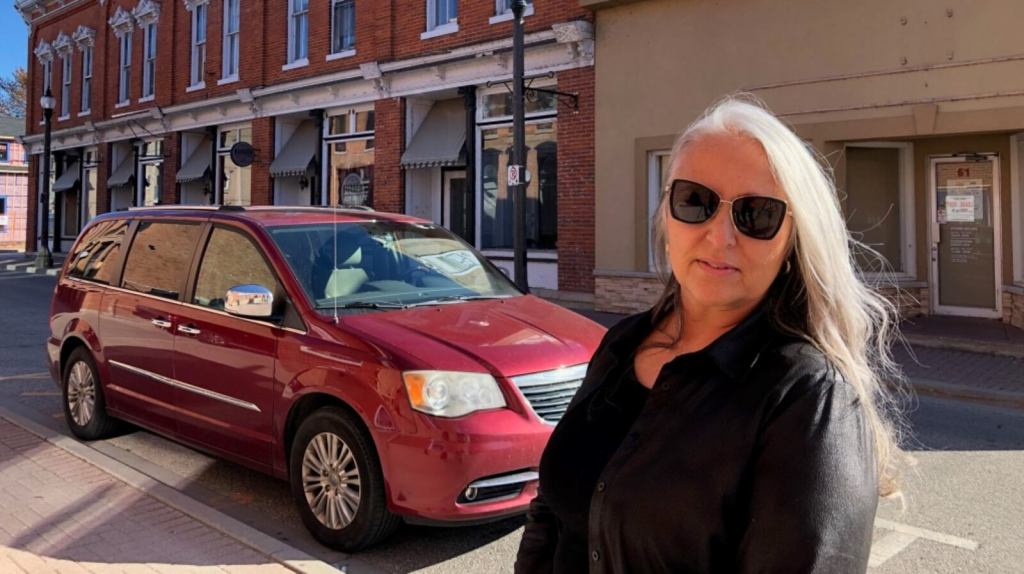
Lauri Brouyette is a property owner and entrepreneur who is helping to bring to life the Amherstburg Anchor District in Amherstburg, Ont. on Monday, Nov. 13, 2023. (Gary Archibald/ CTV News Windsor)
Urban renewal is the theme for a part of downtown Amherstburg — a proposal by local businesses calls for a designated pedestrian shopping zone along historic Murray Street.
It’s called the Amherstburg Anchor District. The site would draw locals and out-of-towners to local shops and attractions, a region of the town that was once at the heart of commerce over a century ago.
Local business and property owners are already renovating and renewing their buildings in the hope that the town will recognize the proposed area as a special area in the municipality.
In addition the proposal calls for a “no vehicles allowed” prohibition to the district to help nurture the tranquil tourist and cosmopolitan nature of the village.
Murray Street view of buildings under restoration in the proposed ‘Anchor District’ of Amherstburg, Ont. on Monday, Nov. 13, 2023. (Gary Archibald/CTV)
Local entrepreneur and property owner Lauri Brouyette is renovating landmark properties in the area working towards the goal of opening this public mall in the near future.
“What we’re doing right now is peeling back the layers on these hundred-and-fifty-year-old buildings – and we’re creating spaces for new businesses to come to Amherstburg,” said Brouyette.
“What we want to do is create a space of community, where everybody can be in the street. They can be enjoying one another’s company. They can be shopping. They can be dining. It’s a kind of gathering place.”
So far, there are plans to open stores, a boutique hotel with a spa, in addition to spaces that will showcase the arts, music, entertainment and local history.
 the burg watch