Amherstburg Accessibility Advisory Committee’s Motion vs. Administration Report

Will council agree with its Accessibility Advisory Committee’s (AAAC) motion that this is not just about accessibility or with an administration report to council that accessibility funding should be used?

I shared my concerns with Councillor McArthur, council’s rep to the Committee, and Councillor Pouget who attended the AAAC meeting when the discussion occurred.

  1. Shouldn’t rest areas be more important than more planters?

    In my January email, I urged council to embrace the spirit of the AODA and consult the public regarding Richmond Street sidewalk repairs even though the report to council did not mention public consultation in accordance with the AODA’s Integrated Accessibility Standards Regulation regarding exterior paths of travel, rest areas:

‘Designated public sectors when constructing new or redeveloping existing exterior paths of travel that they intend to maintain, shall consult on the design and placement of rest areas along the exterior path of travel and shall do so in the following manner: 

  1. the public and persons with disabilities.
  2. a municipal accessibility advisory committee if one exits.’
  3. Why use AODA Compliance Reserve Fund?

The January 29 administration report recommended using funds accrued within the accessibility compliance reserve fund which are intended for repairs and improvements designed to reduce or remove barriers and promote greater access to public spaces, goods and services.

The May 13 administration report states the AODA compliance reserve fund was introduced in 2017 as an annual contribution to the reserves of the town of Amherstburg for municipal building and infrastructure improvements to eliminate barriers with regards to accessibility.

The August 2016 Accessibility Advisory Committee Minutes indicate the motion that administration develop a policy that the committee reviews and edits to ensure the town is promoting accessibility in the strategic plan and ask that $50,000 a year starting in the 2017 annual capital budget be set aside for promoting accessibility in public buildings. 

  • Which recommendation should prevail?

The Accessibility Advisory Committee’s April 10 motion, following concerns that AODA Compliance Funds were to be used for the Richmond St. sidewalk repairs, was that council consider the reconsideration of the funding source for reduction by 50%. 

The clerk advised the committee that his professional recommendation to council would be to use that fund because that is why that fund was created.

  • What type of motion is required?

At the April 10 committee meeting, Councillor McArthur asked, couldn’t council in that very meeting make a motion to reconsider it and then either Council says yes to 50% or no to 50% but it could proceed on the same timeline? 

The clerk answered that yes, if the motion was carefully worded, where it asked for the funding consideration to be reviewed, he didn’t think there would be any reason why they couldn’t be shifted after they were already spent. If for example, it was 31,000 drawn out of the reserve but this recommendation was that it shouldn’t be funded from this reserve then Council could pull the funds from another reserve to replenish that; they do journal entries all the time.

The clerk repeated that if the committee wished to have council look at that and fund it from a different source if it was worded right the project could continue.

Councillor Donald McArthur stated if the committee is comfortable with 50% he’d happily go to council and ask them to reconsider the funding source. 

The May report to council addresses a reconsideration. ‘It is debatable whether such a motion would be permissible though, as portions of the original motion which would be the subject of the reconsideration have already been acted upon, and as such, are not open to be reconsidered. The reconsideration of the funding source would need to be considered outside of the reconsideration on the consultation and/or whether the works should be undertaken. A less procedurally fraught motion would be to cause $16,000 worth of funding to be redirected to the AODA Compliance Reserve fund, from another funding source to offset the associated costs. That said, such a motion is not recommended by Administration as funding this $16,000 from another reserve creates a need to identify $16,000 of unbudgeted and unplanned expense which may have adverse impacts on other projects.’

Didn’t council approve $450,000. of unbudgeted and unplanned expense for pickleball?

Open Air Questions Linger A Year Later – Undue Hardship?

Last spring, following my delegation to council regarding Open Air, I emailed members of council.

2023

request: a description of the undue hardship the town would endure if all the Open Air barriers were to be removed so everyone could equally participate in the community, on and in publicly owned public spaces, as i explained on Monday, March 13, 2023.

two weeks later: it’s now been two weeks since i asked the question below which hasn’t been answered. if no elected official can provide a description of the undue hardship, maybe someone could find the answer from administration? or if members of administration are receiving emails to council, one could answer? I expect someone would know the answer and await it.

Councillor Pouget answered: I do not know the answer to your question.  Do I have your permission to forward your email to administration for their review and response?

2024

Followup subsequent to my delegation to council regarding Open Air Monday night, I emailed Councillor Pouget: did you ever get an answer to my question that i asked on march 15, 2023? 

march 15, 2023: i’m writing to request a description of the undue hardship the town would endure if all the Open Air barriers were to be removed so everyone could equally participate in the community, on and in publicly owned public spaces, as i explained on Monday, March 13, 2023.

Councillor Pouget answered: Sorry, I did not receive a response.

Email request to CAO Critchley, cc to council:

  1. council’s motion to approve Open Air for 2024.
  2. the cost of open air for 2023.
  3. what undue hardship the town would endure if open air ended.
  4. any documentation that administration included the exclusion of people with disabilities as a risk in an open air risk analysis.

Councillor Pouget answered:

  1. To my knowledge, there was no motion to approve Open Air in 2024.
  2. There is no official cost for Open Air in 2023 because it did not include the cost of our Public Works employees.
  3. I personally don’t believe there would be any undue hardship for the Town if open air ended.
  4. Council has never received any documentation to include the exclusion of people as a risk in an open air risk analysis.

Amherstburg Website AODA Compliance Revisited

SHAMEFUL. This feels like a lack of commitment to accessible goods and services, again.

Brief History

An accessible town website was relegated to year 3 of the town’s first accessibility plan, then listed as a priority for 2005, then 2006 and a 2007 report informed council that the website was compliant with W3C accessibility standards. But it wasn’t, according to an external expert. In 2009, a newly designed website was unveiled and problems continued. In 2011, I commented regarding difficulty navigating the website. In 2014, Amherstburg was invited to hire esolutions when the County redesigned its site to meet accessibility standards; Leamington and Essex had already hired the web design company but Amherstburg declined. According to the town’s site, esolutions redesigned Amherstburg’s site in 2016, although it still had issues.

Deadline Extension Requested

Thousands of dollars and redesigns later, in a September 2020 Report to Council, Administration recommended, and council agreed, to request the Province of Ontario to extend the AODA website compliance January 1, 2021 deadline to at least January 1, 2022 due to COVID-19.

The report claimed COVID was the reason, then administration explained at the council meeting that it was due to third parties. Did no one on council realize the town is also responsible for third party vendors?

Compared to the 2005 AODA (Accessibility for Ontarians with Disabilities Act), COVID-19 only existed for a short time but, suddenly, in September 2020, the town needed more time? 15 months more time?

Present Request

Following the January 1, 2022 deadline extension the town requested, a Report to Council for the January 15 Special Council meeting states: ‘The Ministry has approved of this approach and the Town and Ministry have agreed all associated work shall be completed prior to the end of 2024. As such the Town’s work plan expires on December 31, 2024; there are risks that users may encounter barriers in accessing information on Town websites; and the cost to perform a website redesign and refresh not to exceed $70,000, excluding HST.’

My 2020 question stands, why are we not compliant by now?

Related posts:

Town of Amherstburg Requests Website Compliance Deadline Extension

Amherstburg Requests Website Compliance Deadline Extension – The Recommendation.

Amherstburg Requests Website Compliance Deadline Extension – The Resolution

Amherstburg Requests Website Compliance Deadline Extension – The Vote

Amherstburg Requests Website Compliance Deadline Extension – Follow Up Questions to Council

Amherstburg Requests Website Compliance Deadline Extension – Circulation of Resolution

Amherstburg Requests Website Compliance Deadline Extension – Essex County Council Does Not Endorse It

Amherstburg requests Website Compliance Deadline Extension – Third Party Vendors

People With Disabilities Are Not ‘Special’

During the October 12 Heritage Committee meeting, Frank DiPasquale made comments about Brittany Bolger that, to me, were offensive.

The heritage committee was discussing the street naming policy when the town’s heritage planner mentioned other municipalities implement an asset naming policy and Councillor Crain was working on a motion wording.

Listen to the audio.

DiPasquale mentioned generally they use those who served in our military and those who gave up their lives and he agrees with that. He mentioned when Mr. Bolger came and wanted to name his subdivision after his daughter, Brittany, and I believe Council followed through with that, the concern was that he had she is an individual with special needs and disabilities, she soldiers on every day with a positive attitude. He didn’t think there’s not anyone in uniform alive or not that would not tip their hat and be honoured to have their street named after this young lady. He suggested there’ll be other examples of that coming in the future where there’s people that may have special needs or special challenges and he thought they should keep that in mind too.

DiPasquale was a 2022 municipal candidate that, like all other candidates, should have received accessibility materials from the town.

Once again, I emailed council members that this clearly indicates the need for more training, although he should have received it by now. I also shared:

COMMON MYTHS ABOUT DISABILITIES:

Pity

People feel sorry for the person with a disability, which tends to lead to patronizing attitudes. Persons with disabilities generally don’t want pity and charity, just equal opportunity to make their own way and live independently.

Hero Worship

People consider someone with a disability who lives independently or pursues studies to be brave or “special” for overcoming a disability. Most persons with disabilities do not want accolades for performing day-to-day tasks.

Worth repeating: the late disability activist Stella Young says it all so well; one of my favourite videos.

Attitude Check – Hero Worshipping

Excessively praising a person with a disability can be insulting because it implies that you have low expectations of them. For example, calling someone a “hero” or an “inspiration,” though it may seem complimentary, can sound condescending to a person who is simply trying to live their life just like anybody else. 

HIE HELP CENTRE

As a person with disabilities, I regularly encounter physical barriers that provincial legislation mandates to be identified, prevented and removed. But attitudinal barriers offend me the most and there is a list; for example, people make generalized assumptions, behave awkwardly out of ignorance, or adopt an outdated model of disability like pity/charity which leads to patronizing.

During the September 25 council meeting, Councillor Crain spoke briefly and thought it was only right that they help the Bolger family recognize their daughter, Brittany, whereas Councillor McArthur, council’s representative on the accessibility advisory committee, spoke longer and repeated his message throughout that Bolger made a clear, convincing and compelling case.

McArthur weighed in that he was supportive of the motion, acknowledged the town has a policy and stated the developer wasn’t asking for a favour or trying to pull a fast one. He stated Mr. Bolger made a clear, convincing and compelling case to name this after his daughter, who has a remarkable story, and has overcome adversity and serves as a testament to that we are all able that we all have special abilities and that no matter what hand we’re dealt, we can make compelling contributions to our community and she can serve as a role model for youth going into the future. McArthur said he wasn’t going to read Bolger’s letter aloud but he has made a clear and compelling case that the street name will serve a greater good and allow his daughter Brittany to be remembered forever and to serve as a role model for Amherstburg youth and he was happy to support that.

Since I embrace any opportunity to challenge attitudes, I emailed members of council.

the burg watch: As a person with disabilities, and an activist, I encourage you to learn beyond what appears to be very basic training materials you received when elected regarding accessibility and inclusion. 

As you may recall, I pointed out examples of ableism during the election campaign and have since mentioned examples of inappropriate language. As a result of the Brittany’s Gate discussion, I am enclosing a portion of a UN document: 

‘Inclusive language is a key tool in combating ableism and its entrenched manifestations. Ableism is a misguided and biased understanding of disability that leads to the assumption that the lives of persons with disabilities are not worth living. Ableism can take many forms, including harmful language. 

AVOID LABELS AND STEREOTYPES 

Disability is a part of life and of human diversity, not something to be dramatized or sensationalized. Persons with disabilities should therefore not be portrayed as inspirational or “superhuman”. This language implies that it is unusual for persons with disabilities to be successful and productive and to live happy and fulfilling lives. Descriptions of persons with disabilities as “courageous” or “brave” or as having “overcome” their disability are patronizing and should be avoided. Persons with disabilities are the same as everyone else in terms of talents and abilities.’

Councillor Pouget, as usual, was the only one to respond and thanked me for sharing.

The late disability activist Stella Young says it all so well.

New Jack Purdie Park Swing

I posted that I’d have more to say about the Multigenerational Swing Installation Jack Purdie Park.

While the Amherstburg Accessibility Advisory Committee spent about half of the meeting discussing the proposed new LCBO, it took about two minutes for the clerk to provide a background and for the committee chair to note it looks amazing and should be standard.

The clerk advised that for a second time the Town of Amherstburg received funding through the Enabling Accessibility Fund – Youth Innovation Component and they may have to recognize the individual’s support for the community and for being such a forward thinking youth to continue to drive forward the town and its initiatives.

The agenda attachment notes, ‘We are excited to announce the ‘swing along’ installation in Jack Purdie Park, which is already getting lots of use! This multigenerational swing allows children ages 5 and under to sit face-to-face with and in close proximity to a sibling, parent or caregiver. This configuration promotes social, emotional, visual, vestibular, proprioceptive and language skill development and is a great way to teach little ones how to swing.’

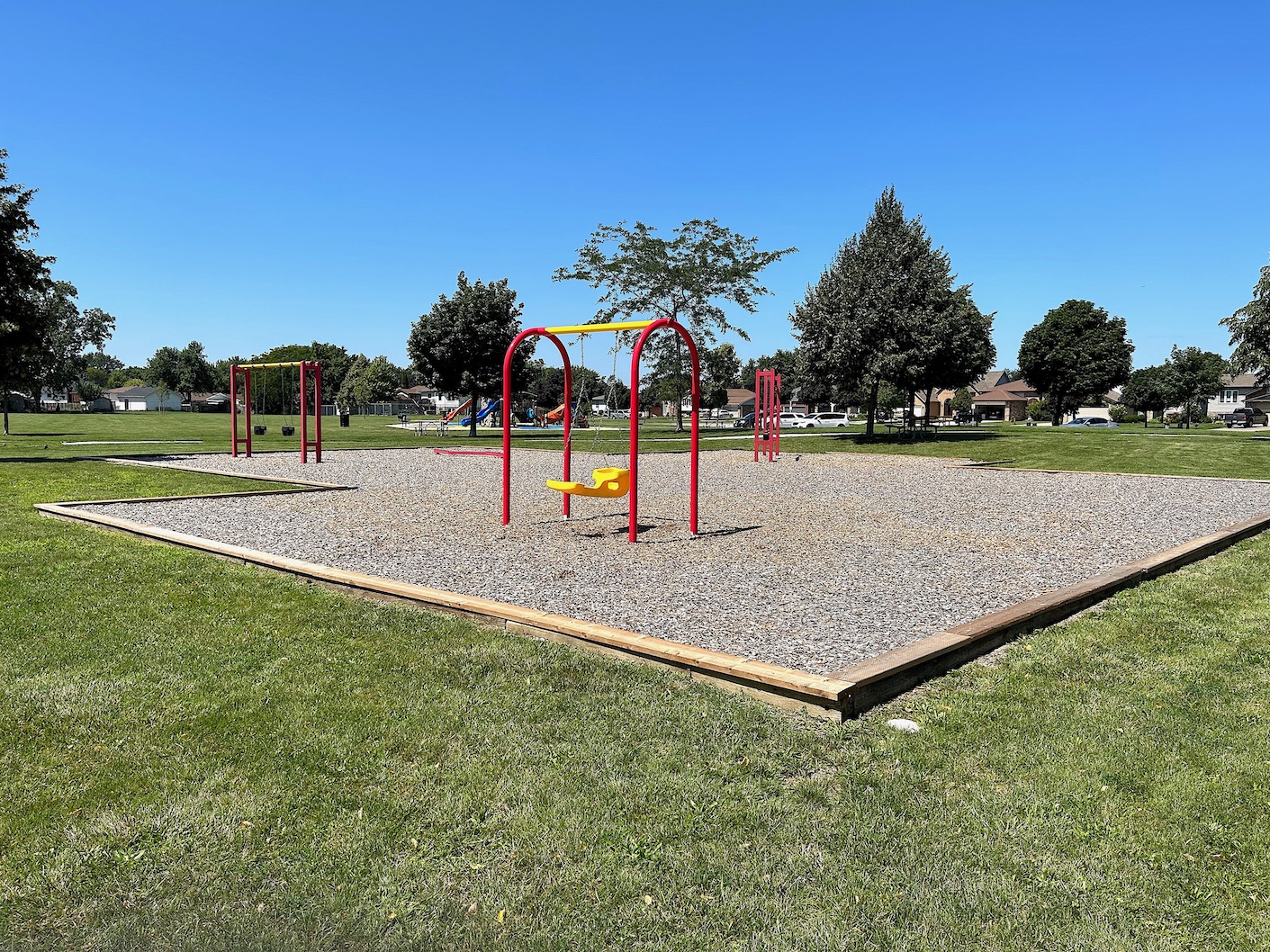
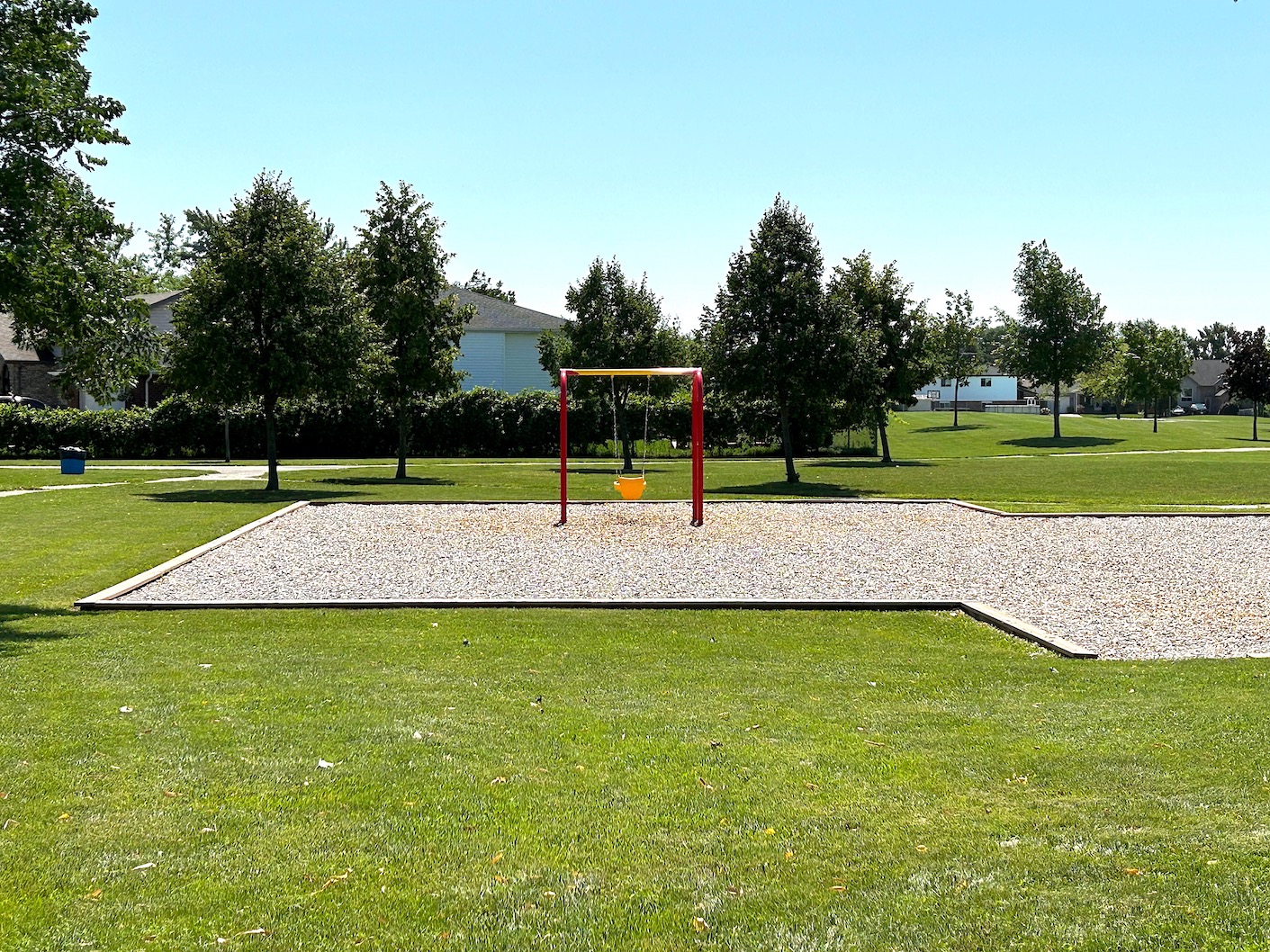
My critique? The swing limits use to under age 5. Stats Canada states in 2021 there were 745 children age 0 to 4; so what about the 1670 children ages 5 to 14 who want to swing? The swing is segregated; I question how that promotes social skill development. There is no sidewalk leading up to it. The surface is soft and uneven. There is no shade. And, as mentioned in this post,

‘When adapted or specialized equipment is made available, it is often limited in quantity and engaged with alone, thereby highlighting the functional limitations of that child and further segregating them from their peers.’

canadian public health association accessibility and usability of play spaces march 2019

Evidence-Informed Recommendations for Designing Inclusive Playgrounds to Enable Participation for Children with Disabilities By: Canadian Disability Participation Project, supported by Canadian Tire Jumpstart.

How does this playground compare?

photo 1: isolated new swing

photo 2: no sidewalk to it

photo 3: the rest of the playground in the distance

Accessibility And Usability Of Play Spaces

Continuing awareness of definitions, the Canadian Public Health Association article, Accessibility and Usability of Play Spaces is another resource that fully explains ‘accessible’ and ‘useable’ playgrounds.

‘When adapted or specialized equipment is made available, it is often limited in quantity and engaged with alone, thereby highlighting the functional limitations of that child and further segregating them from their peers.’

CANADIAN PUBLIC HEALTH ASSOCIATION ACCESSIBILITY AND USABILITY OF PLAY SPACES MARCH 2019

Offensive Terminology

copy of email sent to members of council and CAO Critchley today:

i was appalled to hear one Amherstburg Accessibility Advisory Committee member use “wheelchair bound” and another use “bound” during the June 22 committee meeting; this language is outdated and offensive.

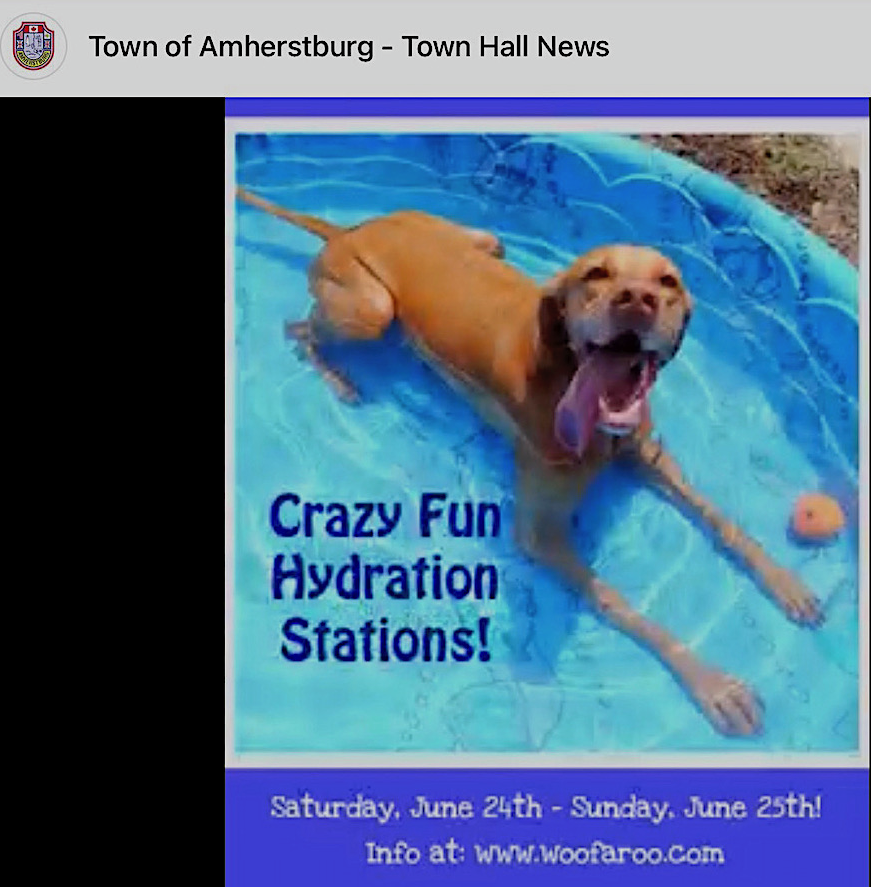
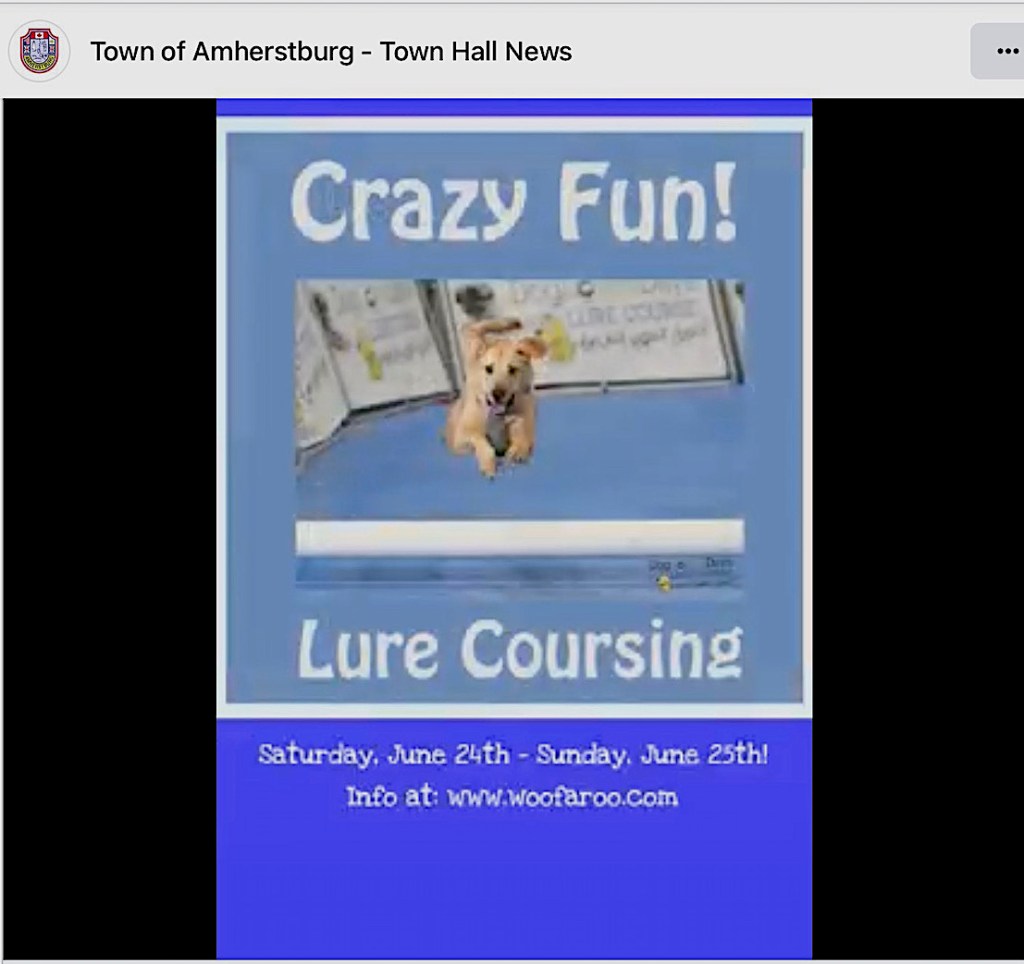
i was equally shocked to see the term “crazy” used in three images on the town’s facebook page in reference to woofaroo. i’ve attached screenshots for your information.

i’m also including a link to an article, Are You Still Using The Word Crazy in 2022, even though it’s 2023.

i suggest there is a need for more training given the language used by a member of a committee that should be more aware of preferred terminology and the number of times i’ve encountered ableist attitudes.

Interested In Accessibility?

Watch the Amherstburg Accessibility Advisory Committee in action. Today’s 5 pm meeting agenda has a few items but the meetings seem to take longer than necessary for the same reasons as the council meetings. Can’t people refrain from providing unnecessary speeches, sharing personal anecdotes, and straying off topic?

ORDER OF BUSINESS includes:
2023 Public Consultation Objectives
Multiyear Accessibility Plan
Survey Responses Report – Public Consultation 2022

Site Plan Review – 580 Middle Side Road
580 Middle Sdrd – Site Plan
That the Site Plan for 580 Middle Side Rd. BE ENDORSED by the Amherstburg Accessibility Advisory Committee.

Site Plan Review – 527 Sandwich Street South
01 May 09 2022 Amherstburg SP Metric SP 2.1 Rev
That the Site Plan for 527 Sandwich Street South BE ENDORSED by the Amherstburg Accessibility Advisory Committee.

Watch online.

Amherstburg An Inclusive Community? Says Who?

I think different people have different definitions of what an ‘inclusive community’ is. How does a crosswalk, sponsored by a family, reinforce what an inclusive community is all about any more than raising a flag? Might these gestures be seen as minimal efforts?

Mayor Prue broke the tie vote in favour of Open Air, despite objections that it created barriers that excluded people with disabilities. Councillor Crain stated yes, he would remove Open Air barriers and then voted in favour of it. How does that make #Amherstburg an inclusive community?

CTV News Windsor reports Amherstburg reveals first-ever rainbow crosswalk representing inclusivity and included the following quotes:

‘WE ARE AN INCLUSIVE COMMUNITY. GET USED TO IT’

“It helps to reinforce what an inclusive community is all about,” said Amherstburg Mayor Michael Prue. “I’m very proud of this town and foresight and the inclusivity that people have shown.”

‘INCLUSIVITY AND ACCEPTANCE’

On Twitter, Amherstburg Coun. Linden Crain also voiced his support for the new crosswalk.

“Amherstburg has taken a colourful step forward towards inclusivity & acceptance. We are thrilled to announce the installation of the town’s first-ever rainbow crosswalk! A huge thank you to the Goggin Family for making this happen. Happy #PrideMonth!”